
Introduction
In 2026, your customers treat time the same way. They won't email and wait. They won't fill out a form and hope. They won't "check back later." They arrive on your website with intent, curiosity, or a problem, and if they don't get an answer immediately, they leave.
No questions asked. No complaints. No warning. Just a closed tab and a lost opportunity.
Shocked?
This isn't impatience. This is modern customer behavior.
Today's users are trained with instant experiences:
- One-click checkouts
- Same-day deliveries
- Real-time messaging
But when your website stays silent, even for a few minutes—even above 15-20 seconds—it doesn't feel neutral. It feels broken and slow.
And yet, many businesses still treat chatbots like a technical project:
- Weeks of setup
- Complicated integrations
- Endless configuration
- "We'll launch it later"
That delay costs more than most teams realize. In 2026, a chatbot isn't a support add-on. It's your first responder, your 24/7 salesperson, your lead capture engine. And adding one shouldn't feel like building software. Instead, it should feel like flipping a switch.
Because speed, clarity, and immediacy are no longer differentiators. They're the baseline. If your website can't respond instantly, your customers already have—by leaving.
The Cost of Slow Responses in 2026
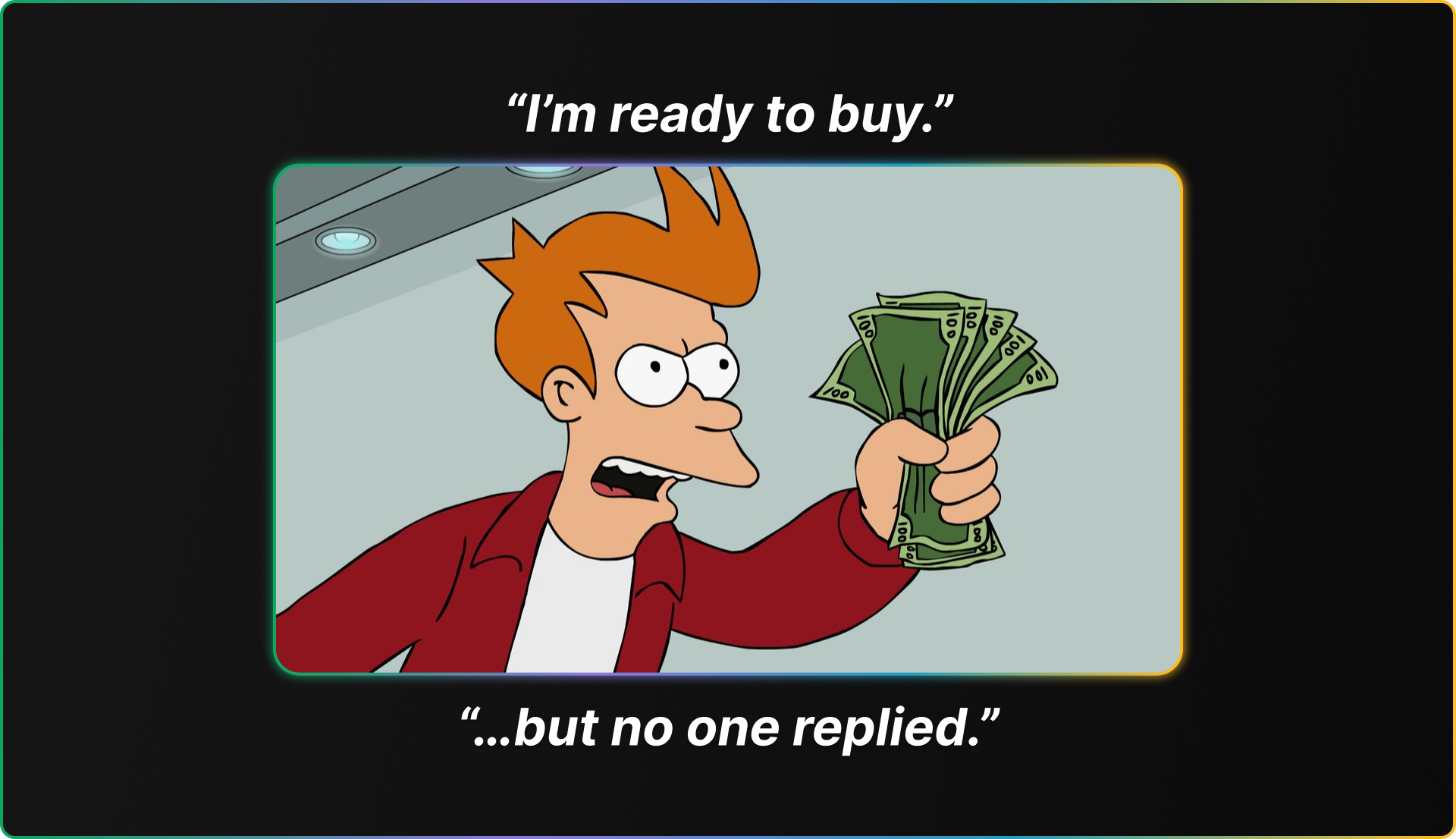
Let's start with an uncomfortable truth. Most businesses don't lose customers because of bad products or pricing. They lose customers because they respond too late, or not at all.
By 2026:
- Customers expect real-time engagement
- Response windows are measured in seconds, not hours
- Attention spans are shorter, but intent is sharper
If a visitor lands on your website with a question about pricing, availability, or suitability, that moment is fragile. Delay the response, and the moment disappears.
Who Feels This Pain Most
This is especially painful for:
- Service businesses handling inbound inquiries
- Ecommerce brands dealing with pre-purchase hesitation
- SaaS products qualifying high-intent leads
- Local businesses competing on immediacy
The Hidden Cost
The cost of slow responses isn't just missed chats. It's lost revenue that never shows up in reports.
Ask yourself:
- How many visitors leave your site without converting?
- How many questions go unanswered after business hours?
- How many "almost customers" disappear silently?
In 2026, every unanswered question is a conversion leak.
Why Traditional Chatbots Are No Longer Enough
Here's the irony.
Chatbots were created to reduce friction, but for many teams, they've become friction themselves. Traditional chatbot setups often require:
- Technical configuration
- Manual conversation flows
- Separate dashboards
- Complex CRM integrations
- Constant maintenance
What starts as "let's add chat support" turns into a mini project. And for small or growing teams, that complexity kills adoption.
The result?
- Chatbots get installed late
- Or installed poorly
- Or installed and forgotten
In 2026, this approach is outdated.
Chatbots are no longer experimental tools. They're infrastructure. And infrastructure should be easy to deploy, easy to manage, and deeply connected to the rest of your system. If adding a chatbot feels heavy, something is broken.
The One-Click Chatbot Shift
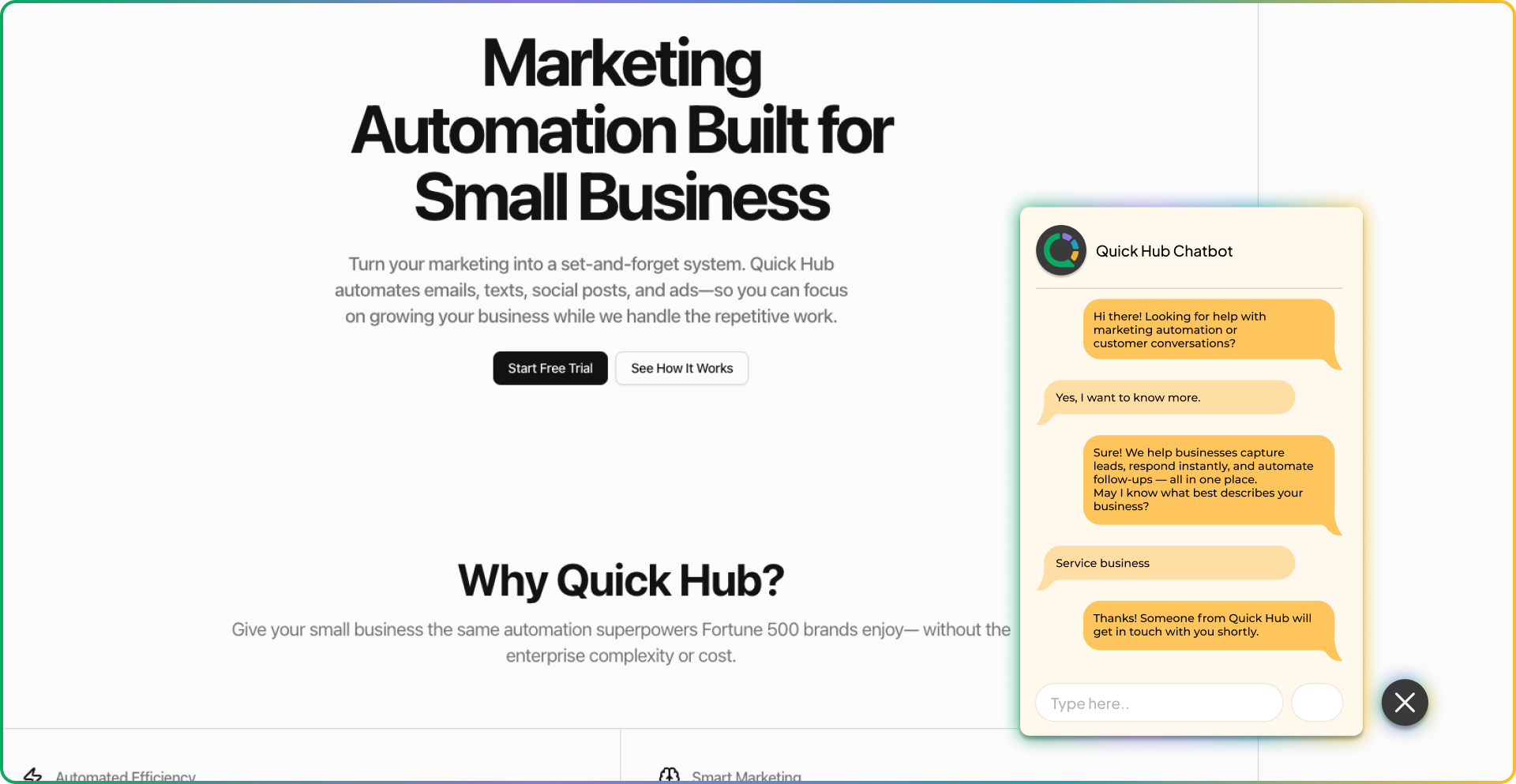
Here's the new expectation: If a chatbot is essential, it should be effortless to activate.
A one-click chatbot experience means:
- No coding
- No complex setup
- No fragmented tools
- No waiting period
It means clicking "enable" and immediately having:
- A live chatbot on your website
- Pre-built conversation flows
- Automatic lead capture
- Instant responses
- Connected follow-ups
This shift isn't about convenience. It's about speed to value.
In 2026, businesses that win aren't the ones with the most advanced tech. They're the ones that deploy faster and learn sooner. A chatbot that takes weeks to configure is already obsolete by the time it goes live.
How to Add a Chatbot to Your Website in Minutes (Not Weeks)
In 2026, adding a chatbot shouldn't feel like a technical project. It shouldn't involve back-and-forth with developers, endless configuration screens, or "we'll deploy it next sprint."
If a chatbot is meant to reduce friction for customers, setting it up should also reduce friction for teams.
That's exactly how QuickHub approaches website chatbots: simple, fast, and operational almost instantly.
Step-by-Step Setup
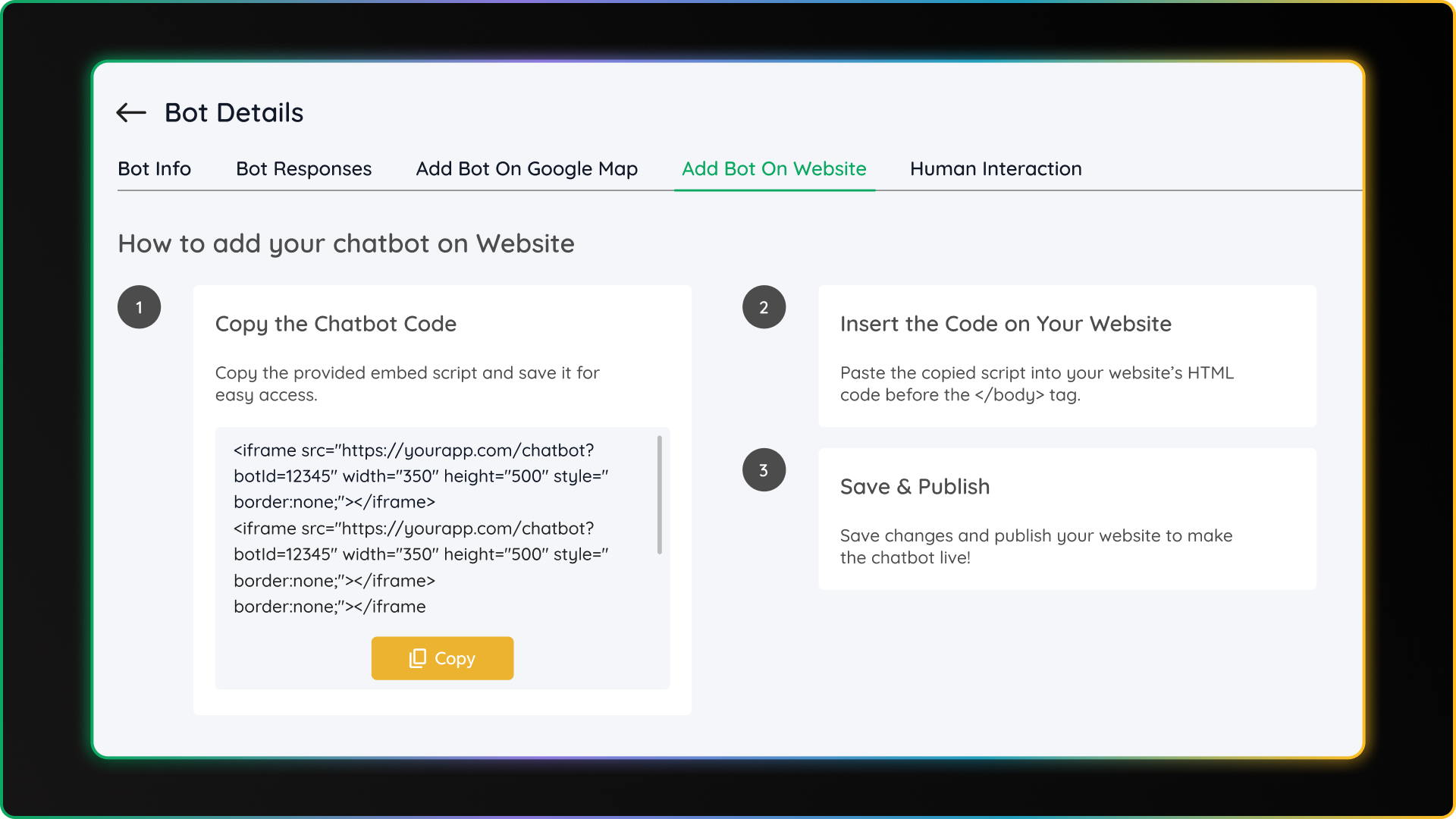
Step 1: Go to "Bot Details" under Quick Chat
Inside QuickHub, navigate to Quick Chat and open Bot Details. This is where your chatbot's identity, behavior, and status live—clean, clear, and organized. No guesswork.
Step 2: Copy the Chatbot Code
QuickHub generates a ready-to-use embed script for your chatbot. Just copy the code and keep it handy. No SDKs. No custom builds. No waiting.
Step 3: Insert the Code on Your Website
Paste the script into your website's HTML, right before the </body> tag. That's it. Whether it's a landing page, product page, or full website, the chatbot fits in instantly.
Step 4: Save and Publish
Save your changes, publish your site, and your chatbot is live. Not tomorrow. Not after testing cycles. Live now.
Ongoing Tweaks
Want to tweak things later? You can update Bot Details or Bot Status anytime from Bot Info.
Need smarter conversations? Go to Bot Responses, click Add Bot Response, and shape how your chatbot talks to visitors. No friction. No delays. Just instant conversations, right where customers expect them.
Chatbots Are No Longer Just Support Tools
Another mindset shift is happening. Chatbots are no longer "support widgets." They are:
- Lead qualifiers
- Conversion assistants
- Onboarding guides
- Availability checkers
- Purchase nudgers
They sit at the intersection of sales, marketing, and support.
That's why modern chatbots must connect with:
- Your customer data
- Your campaigns
- Your workflows
- Your analytics
This is where platforms like QuickHub approach chatbots differently. Instead of treating chat as a standalone feature, Quick Chat is designed as part of a larger system, one that connects conversations to customers, campaigns, and actions automatically.
Because a conversation without context is just noise.
From Conversation to Conversion (Automatically)
Imagine this flow in 2026:
- A visitor lands on your website late at night
- They ask a question through chat
- They receive an instant, relevant response
- Their details are captured automatically
- A follow-up message is scheduled
- Your team sees the context the next morning
- No human intervention required
The System Flow
With Quick Chat, conversations don't end at replies. They trigger actions:
- Leads flow into Quick CRM
- Follow-ups are launched via Quick Campaigns
- Reminders and handoffs are handled by Workflow Automation
- Repetitive queries are handled by Quick Agents
This isn't automation for the sake of automation. It's continuity.
The customer doesn't feel handed off. The team doesn't feel overwhelmed. The system simply moves forward.
Personalization at Scale (Without the Overhead)
One of the biggest myths about chatbots is that they feel robotic.
Yes, that was true once. But it's not true in 2026.
Modern chatbots are contextual. They adapt based on:
- Pages visited
- Questions asked
- Time of interaction
- Previous conversations
Instead of generic responses, customers receive:
- Relevant answers
- Smart prompts
- Clear next steps
This is how personalization scales—not by writing more copy, but by letting systems handle context.
When Quick Chat works alongside Quick CRM, every conversation becomes smarter over time. Returning visitors don't start from zero. Past interactions inform future responses.
The Key Questions
Now, ask yourself:
- Are your website conversations learning?
- Or are they repeating the same static scripts?
In 2026, static experiences feel broken.
Why Analytics Matter More Than Replies
Here's something most teams miss. The real value of chatbots isn't just in responding. It's in listening.
Every chat reveals:
- What customers are confused about
- What do they care about
- What stops them from converting
- What language do they use
From Isolation to Insight
When chat data is isolated, those insights disappear. But when chat connects to your broader system, patterns emerge.
With QuickHub, chatbot conversations don't live in isolation. They feed into:
- Campaign planning
- Content decisions
- Product positioning
- Sales prioritization
Chat becomes a signal, not just a support channel. And in 2026, businesses that win are the ones that listen faster than they speak.
The Real Benefit: Removing Friction for Teams
One-click chatbots aren't just about customer experience.
They're about team sanity.
When chat setup is complex:
- Teams delay implementation
- Ownership becomes unclear
- Optimization never happens
But when chat is easy:
- It gets activated early
- It becomes part of daily operations
- It improves continuously
With QuickHub, teams manage:
- Conversations via Quick Chat
- Leads via Quick CRM
- Follow-ups via Quick Campaigns
- Automation via Workflow Automation
All in one place.
No switching tabs. No stitching context. No more "who handles this?" confusion.
Simplicity isn't a luxury. It's what allows teams to actually use the tools they have.
Why 2026 Makes This Non-Negotiable
Let's zoom out. In 2026:
- AI-driven interactions are expected
- Instant responses are normal
- Frictionless experiences define trust
- Manual workflows don't scale
Customers won't praise you for fast replies. But they'll punish you for slow ones.
Adding a chatbot should no longer be a project. It should be a decision.
Click once.
Go live.
Learn immediately.
That's the new standard now.
Final Thought: If It's Hard to Add, It's Already Too Late
If adding a chatbot to your website feels heavy, technical, or delayed, you're already losing ground.
In 2026, winning businesses don't ask: "Should we add chat?"
They ask: "How fast can we learn from our conversations?"
A one-click chatbot experience isn't about ease. It's about staying relevant. And platforms like QuickHub exist to make that shift inevitable, by turning chat from a tool into a system, and conversations into momentum.
Because customers are already talking. The only question is whether your business is ready to respond, instantly.