Introduction
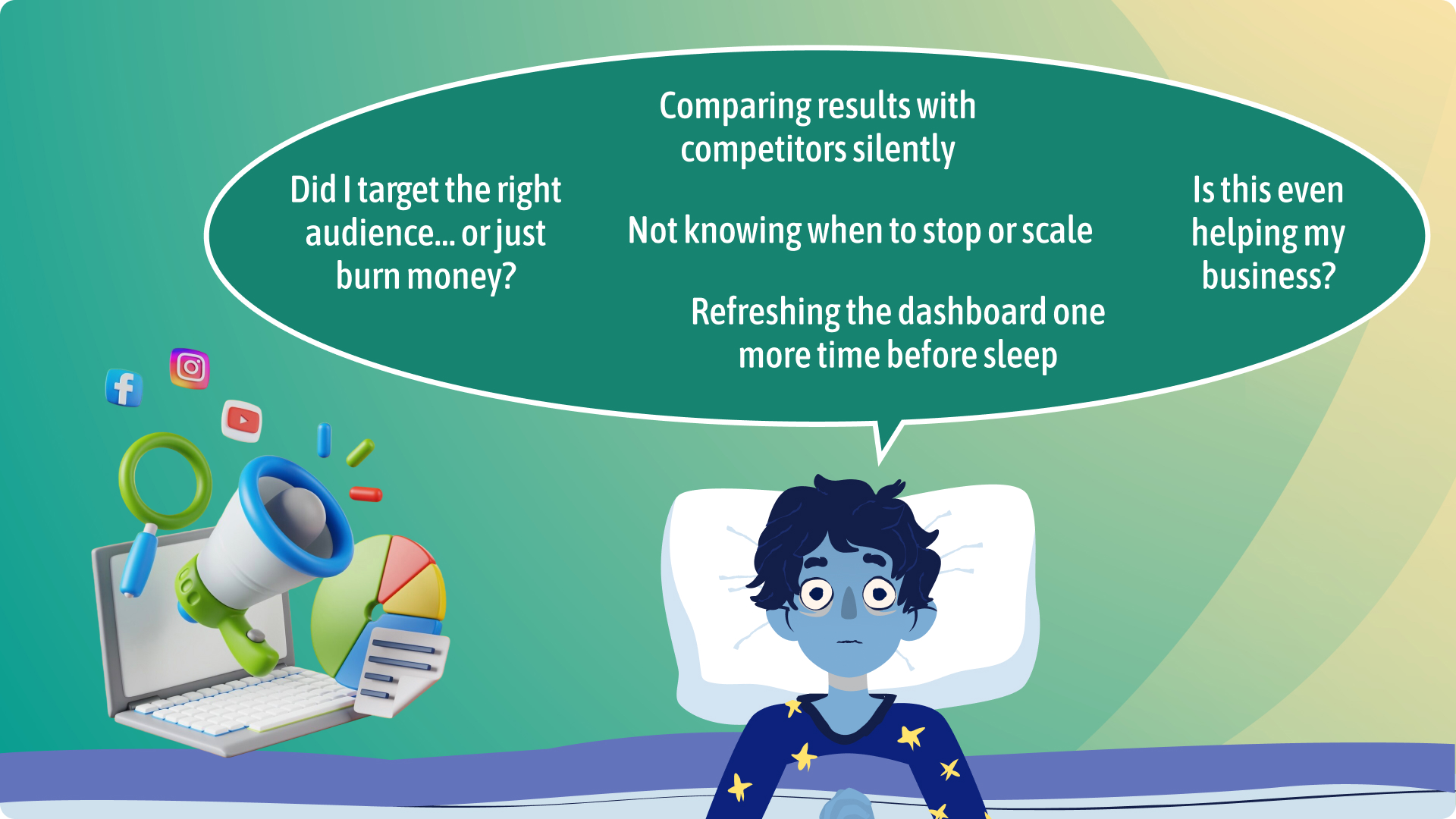
Ask any marketer or small business owner how their ads are performing, and you'll notice a pause before the answer even comes out. It's rarely confidence. Usually, it's something vague like:
- "Good… I think?"
- "We got some clicks,"
- "It's optimizing, at least that's what the agency said"
That hesitation is the real problem.
Most businesses aren't running ads with clarity, they're running them on hope. Money goes out every day, dashboards fill up with numbers, reports arrive on schedule, but understanding never shows up. It's not because marketers don't care or aren't trying; it's because modern advertising has quietly become overwhelming.
You're expected to know multiple platforms, dozens of performance metrics, algorithm shifts, and constant learning phases, all while being told to "trust the process." Running ads today feels like being dropped into a cockpit full of flashing lights and unfamiliar controls and being told: "Take off, land safely, and get a 4x ROAS (Return on Ads Spent)."
Most ad platforms give you data, but not clarity. QuickHub exists to bridge that gap, turning scattered metrics into actionable insights.
Why Most Businesses Don't Really Know How Their Ads Are Performing
On paper, businesses track everything. But, in reality, they're drowning.
Teams jump between:
- Meta Ads Manager
- Google Ads
- Analytics dashboards
- CRM reports
- Spreadsheets
- Screenshots sent via WhatsApp
The result?
Lots of numbers, zero clarity.
You might know:
- How much did you spend?
- How many clicks came in?
- How many leads were generated?
But what you often don't know:
- Why did one campaign work and another didn't?
- Which audience actually cared?
- Which channel deserves more budget?
- What to repeat next month?
Without proper campaign performance analysis, ads become reactive rather than intentional. QuickHub's Quick Campaign centralizes all your campaigns into one dashboard, showing not just what happened, but why it happened, giving marketers the confidence to make smart decisions.
The Metrics Everyone Tracks (And Why They Aren't Enough)
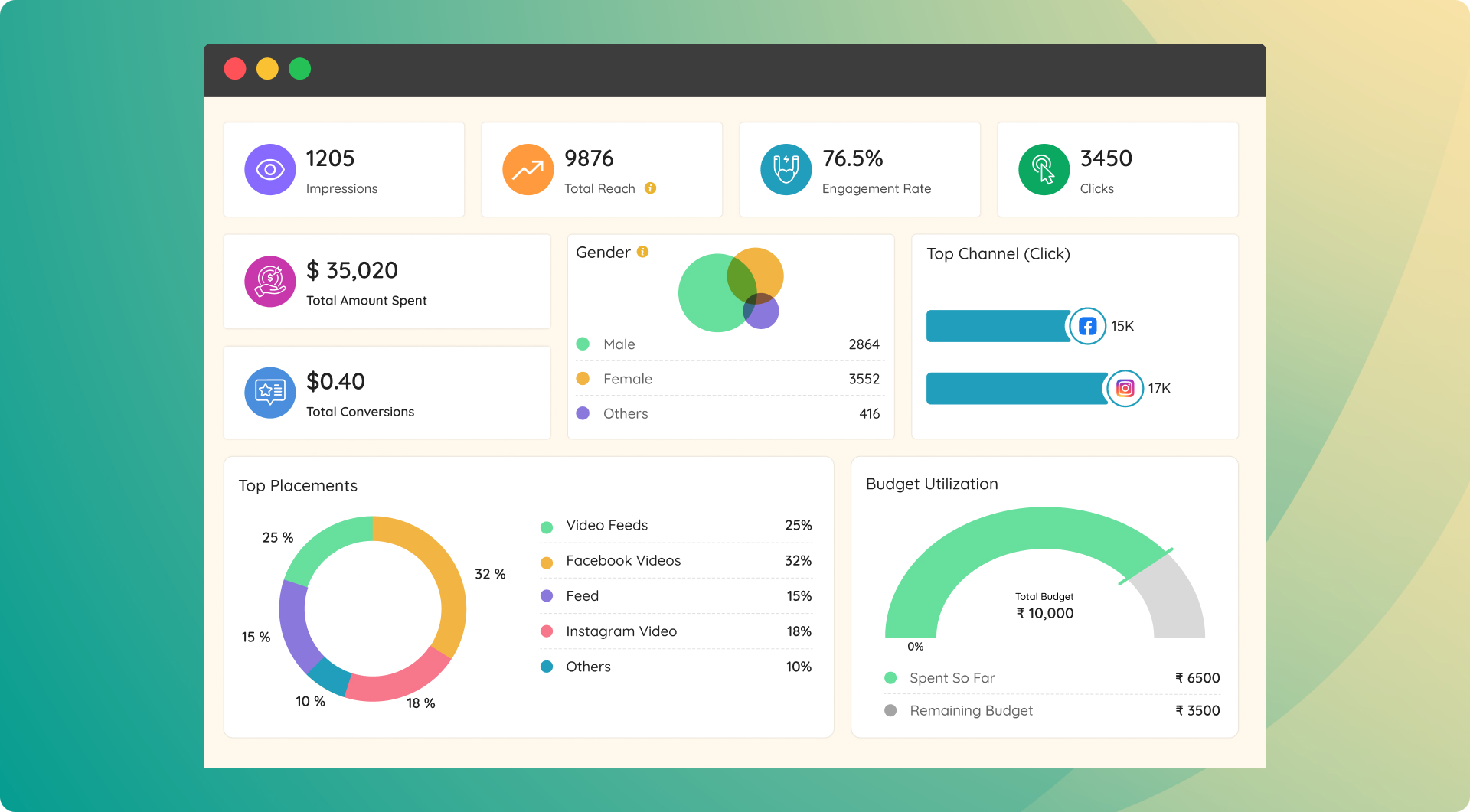
Most teams obsess over clicks, CTR, spend, and leads. While important, these metrics only show the headline, not the full story. Clicks don't explain intent, CTR doesn't explain resonance, and spending doesn't explain efficiency.
To truly improve ad performance, you need to track the quiet signals—the metrics that tell the story behind the numbers. QuickHub highlights these signals, giving context, trends, and actionable recommendations.
The Quiet Metrics That Reveal the Real Story
1. Impressions — Are People Even Seeing You?
Impressions are often overlooked but reveal whether your ads are actually present in the market. If impressions are stagnant or declining, it usually means:
- Targeting is too narrow
- Delivery is weak
- Bids or creatives aren't competitive enough
Studies show users need 5–7 impressions per ad before brand recall begins. Ads that aren't seen can't convert, no matter how good the creative is. QuickHub allows you to track impressions across campaigns and platforms, ensuring your visibility is always optimized.
2. Reach — Expanding or Recycling Attention?
Healthy impressions don't always mean growth. Reach measures the unique audience your ads touch. Without expanding reach, campaigns plateau:
- Users see the same ads repeatedly
- Engagement drops
- Click costs rise
QuickHub makes it easy to monitor reach trends, so you know whether your campaigns are expanding your audience or recycling the same attention. Think of reach as oxygen for your ads—without it, campaigns suffocate, no matter how much budget you throw at them.
3. Engagement — Did Anyone Actually Care?
Scrolling is ruthless. Your ad has less than a second to capture attention. Metrics like likes, comments, shares, saves, and video views aren't vanity, they're signals that your audience paused long enough to notice.
Low engagement is often a sign of:
- Poor creative-market fit
- Generic messaging
- Weak visual storytelling
QuickHub tracks engagement alongside impressions and reach, highlighting campaigns that need creative refresh before performance drops. Think of engagement as an early-warning system—ignoring it costs money quietly.
4. Cost Per Click (CPC) — What Your Message Is Really Worth
Most marketers treat CPC as a simple success metric: lower is better, higher is worse.
In reality, CPC reflects how much attention your message commands in a competitive auction. Rising CPC can indicate:
- Creative fatigue
- Poor targeting
- Messaging that no longer resonates
QuickHub contextualizes CPC with engagement, conversion rate, and lead quality, so marketers make informed adjustments rather than reacting emotionally. CPC is a pricing signal, not a scoreboard.
5. Leads — Where Theory Meets Reality
Leads are the ultimate reality check. Clicks, impressions, reach, and engagement tell parts of the story, but leads tell you whether it actually converts.
When lead volume is low, QuickHub helps you trace the problem backward through the funnel:
- Audience targeting misaligned
- Ad creative failing to communicate value
- Landing page experience creating friction
- Offers not compelling enough
- Timing issues
By analyzing leads with context, QuickHub turns outcomes into actionable insights, making ad spend deliberate rather than blind.
6. Demographics — Who Actually Responded?
Assumptions about your audience rarely match reality. You might target 22-year-old founders, but actual responders may be 38-year-old managers. QuickHub provides real demographic insights including:
- Age
- Location
- Device type
- Job role
These insights help marketers refine targeting, adjust creative, and align offers with actual responders, not imagined ones.
7. Top-Performing Channel — Where Money Works Best
Not all channels are created equal. Some look exciting; others quietly deliver consistent ROI. QuickHub shows:
- Channel-level clicks, leads, and conversions
- Cost per lead and downstream revenue impact
- Where scaling will actually work
Focusing on top-performing channels avoids trend-chasing and wasted ad spend, allowing growth to be intentional and predictable.
8. Campaign History — Learning from the Past
Most businesses obsess over current campaigns and ignore past ones. Yet historical campaigns hold hidden insights:
- When do high-converting campaigns launch?
- Which audiences respond fastest?
- Which formats underperform consistently?
- Which creative angles outperform expectations?
QuickHub surfaces these patterns, turning hindsight into foresight. By reviewing past campaigns, marketers avoid repeating mistakes, allocate budget smarter, and scale campaigns confidently.
Data Doesn't Improve Ads, Interpretation Does
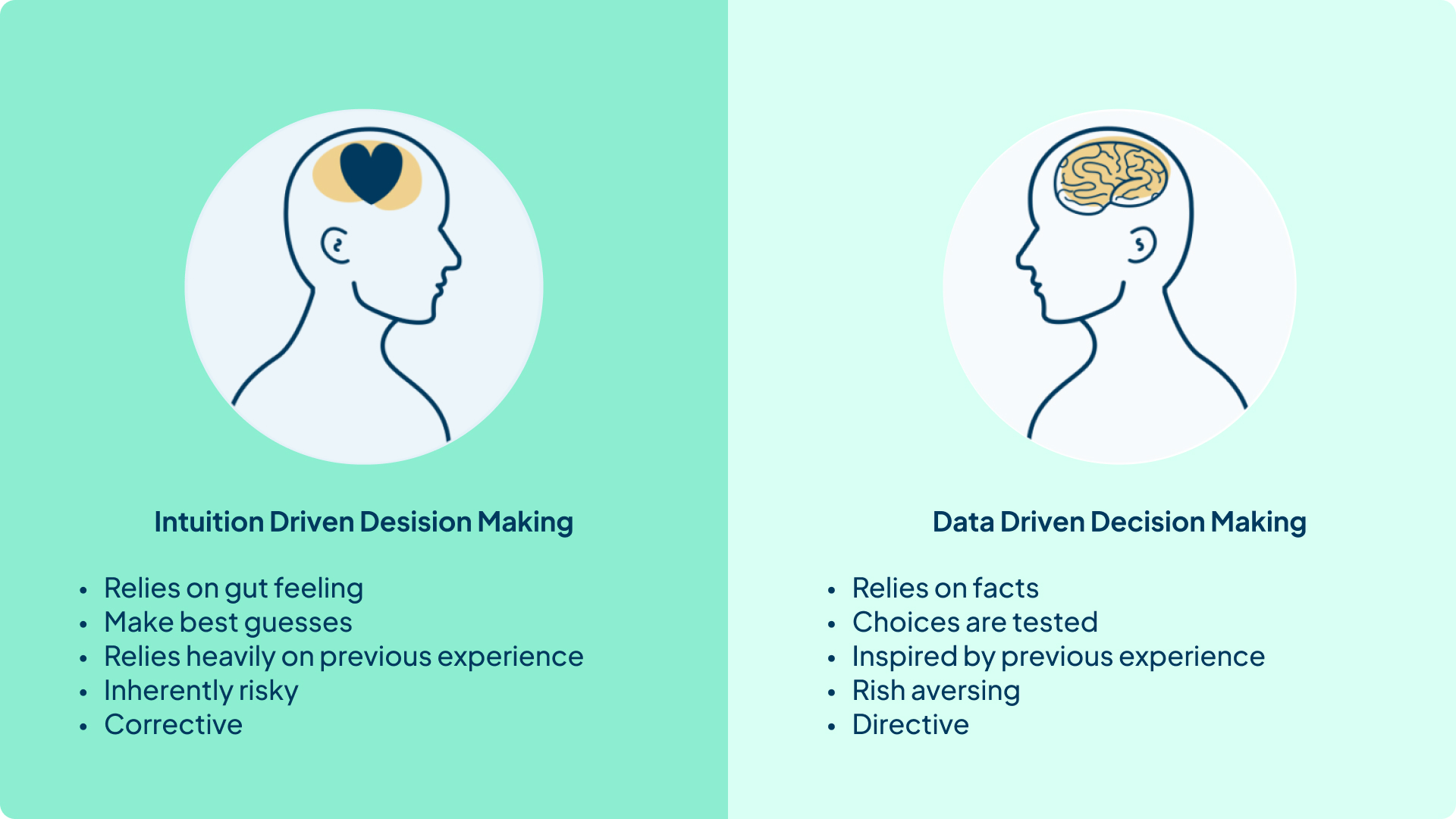
Here's the hard truth: raw data doesn't make your campaigns better.
Metrics, dashboards, and analytics are only as useful as the interpretation behind them.
With QuickHub, marketers can:
- Connect scattered performance metrics across platforms
- Identify weak links in campaigns
- Translate trends into actionable decisions
- Adjust targeting, creatives, and budgets strategically
Unified ad analytics transforms guesswork into predictable growth, making campaigns repeatable and ROI-focused.
From Guesswork to Ad Mastery
The real transformation happens when businesses stop guessing and start understanding ad performance. QuickHub helps teams:
- Target the right audience at the right time
- Make smarter creative decisions
- Reduce customer acquisition costs
- Improve conversion rates
- Scale campaigns predictably
Ads stop being random experiments and become strategic, repeatable systems powered by data-driven insights.
Where Ad Campaign Analysis Finally Makes Sense
A unified QuickHub dashboard brings everything into one view:
- Metrics: impressions, reach, clicks, engagement, CPC, leads
- Audience insights: demographics and behavior patterns
- Channel performance: top-performing channels and ROI comparison
- Campaign history: timing, creative performance, and recurring patterns
- Smart suggestions: recommendations based on past performance
It's like Netflix recommendations, but for revenue. Every metric and trend is actionable, turning data into decisions that drive growth rather than guesswork.
Why This Level of Analysis Matters for Growth
When you can truly interpret ad performance, everything changes:
- Stop wasting ad spend: Avoid campaigns that don't convert
- Fix what matters: Identify creative fatigue, targeting gaps, or landing page issues
- Scale effectively: Focus on high-performing channels, audiences, and formats
- Predictable ROI: Build repeatable, measurable growth systems
QuickHub doesn't just improve campaigns, it transforms your entire marketing strategy, giving clarity, control, and confidence to small business marketers.
Final Word: Listening to Your Ads
Your campaigns are constantly communicating in numbers, patterns, and signals. Most businesses glance at metrics without interpreting them. QuickHub changes that by giving marketers:
- Clarity on audience behavior
- Insights on campaign efficiency
- Guidance on scaling top-performing channels
- Ability to turn every metric into actionable decisions
By listening to Quick Ads in QuickHub, you transform guesswork into a data-driven growth engine, creating predictable systems that continuously improve ROI and scale your marketing with confidence.