

Introduction: The Growth Challenge for Small Businesses
This question is for all the small businesses, for whom growth often feels like a never-ending battle. Limited time, tight budgets, and endless marketing tasks can make it nearly impossible to scale efficiently. From sending emails to managing customer relationships and gathering reviews, there's never a shortage of things to do, and very little time to do them.
This is where QuickHub comes in. Imagine having a single platform that automates your email campaigns, SMS messages, customer support, *review management, and even your *AI-powered marketing tasks, all in one place. Surprised?
With us, small businesses can implement *relationship-based marketing, streamline operations, and use *automation tools to grow without burning out.
In this article, we'll explore *how QuickHub helps small businesses automate growth, boost *conversion rates, build *brand authority, and leverage *social proof, all while saving time and money. Whether you're a startup looking for *affordable marketing automation or a small business seeking the *best CRM software in the US, this guide will show you how to make automation work for you.
What is Marketing Automation, and Why Does It Matter?
*Marketing automation might sound like a buzzword, but for small businesses, it's a game-changer. Simply put, *marketing automation is the use of software and tools to *automate repetitive marketing tasks, allowing you to focus on growing your business instead of getting bogged down in day-to-day operations.
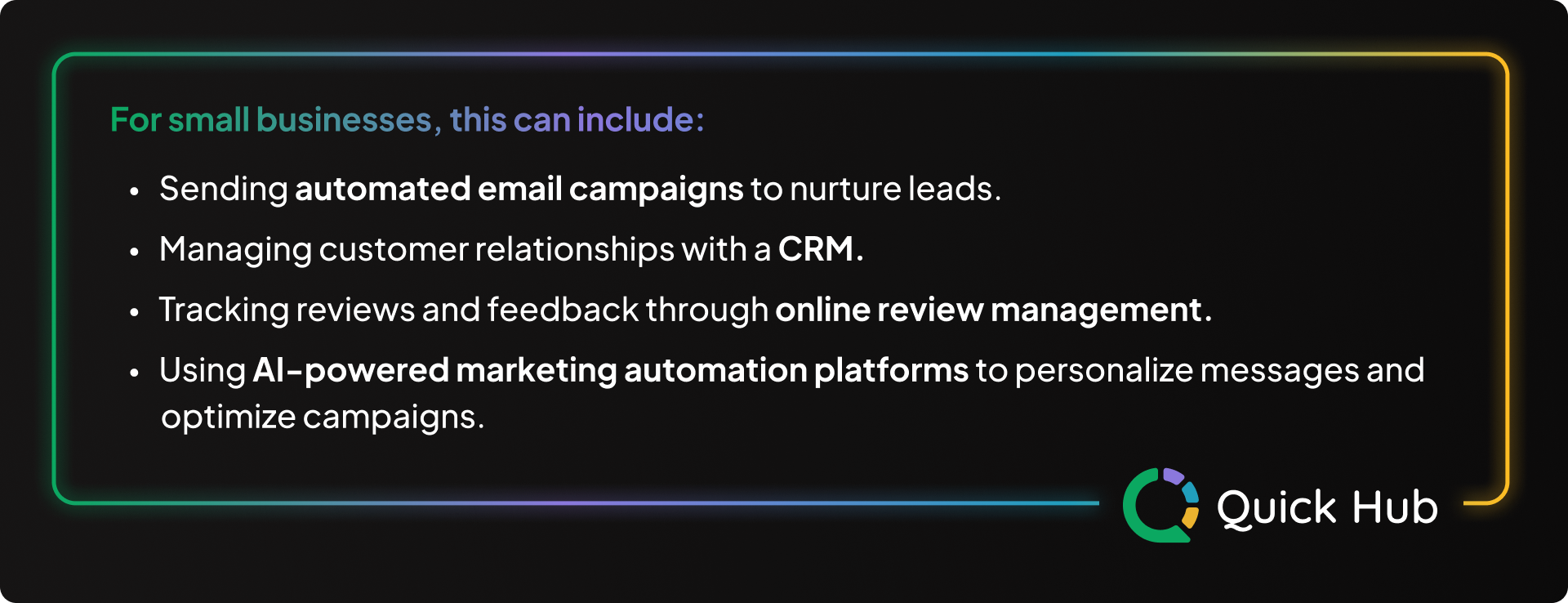
Without automation, small teams often struggle to keep up with *workflow automation for marketing campaigns, leading to missed opportunities, inconsistent customer engagement, and slower growth.
*QuickHub addresses these challenges as an *all-in-one marketing automation platform. With features designed specifically for small businesses, we combine *AI agents, *CRM tools, *email and SMS automation, and *review automation to streamline operations and increase efficiency. This means you can focus on building relationships, nurturing customers, and driving *conversion rates, all while saving time and effort.
In the next section, we'll dive deeper into *the specific QuickHub features that make automating growth effortless, so you can see exactly how your small business can benefit.
QuickHub Features That Drive Growth
One of the biggest advantages of using *QuickHub is that it combines multiple marketing and automation tools into a single, easy-to-use platform. For small businesses, this means fewer tools to manage, less confusion, and more time to focus on *growing your business. Here's how QuickHub makes automation simple and effective:
Automated Email & SMS Campaigns
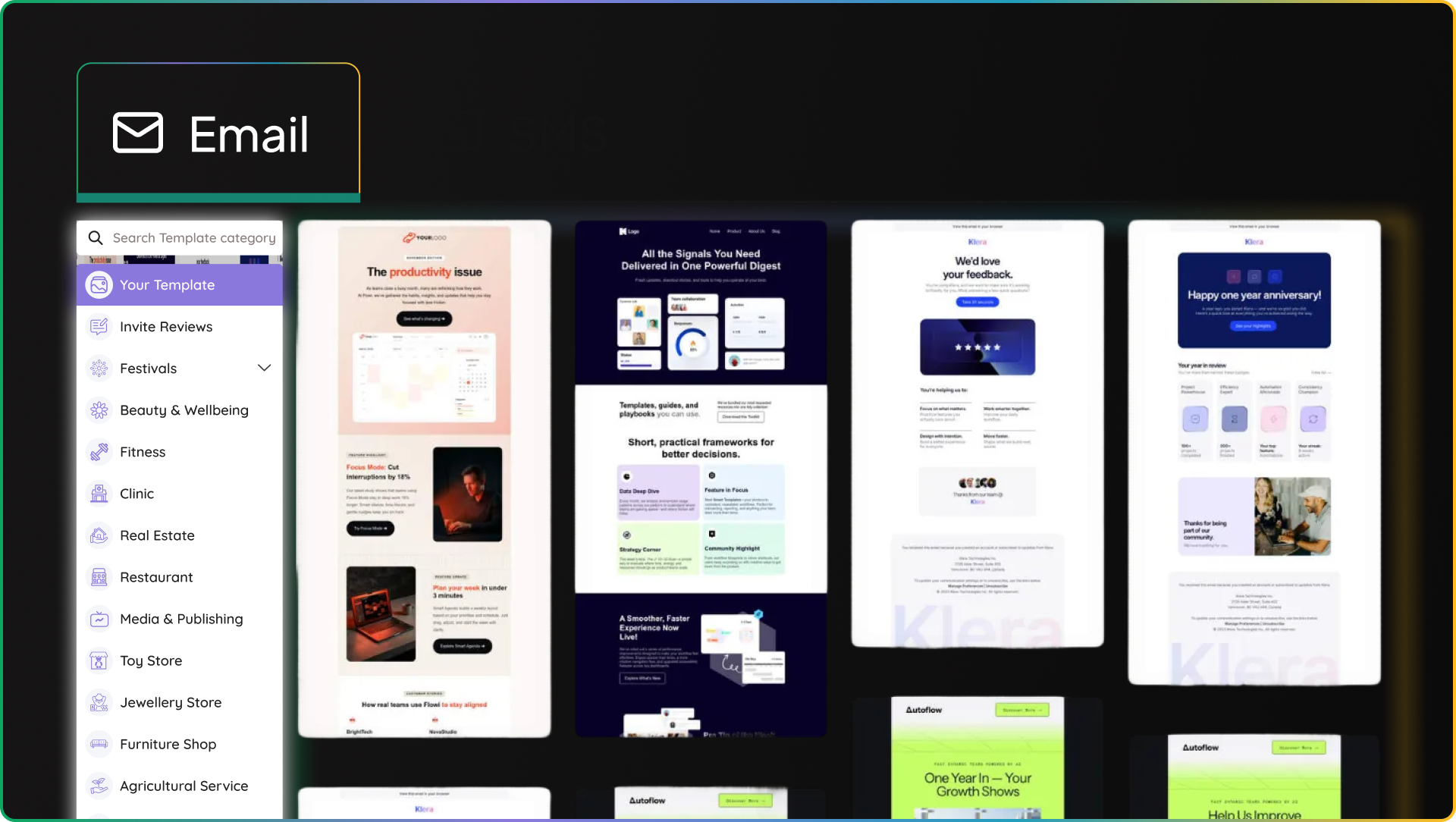
With us, you can create *automated email campaigns and SMS messages that reach your customers at the right time, without lifting a finger. Whether you want to nurture leads, announce a promotion, or re-engage inactive customers, QuickHub makes it easy.
Key benefits:
- Save time with *email automation and pre-built templates.
- Increase engagement and *conversion rates.
- Use the *best email and SMS marketing software for small businesses without breaking the budget.
For startups, QuickHub is one of the *most affordable marketing automation platforms in the US, giving small businesses access to *powerful marketing software usually reserved for large enterprises.
AI Agents & Chat Assistants
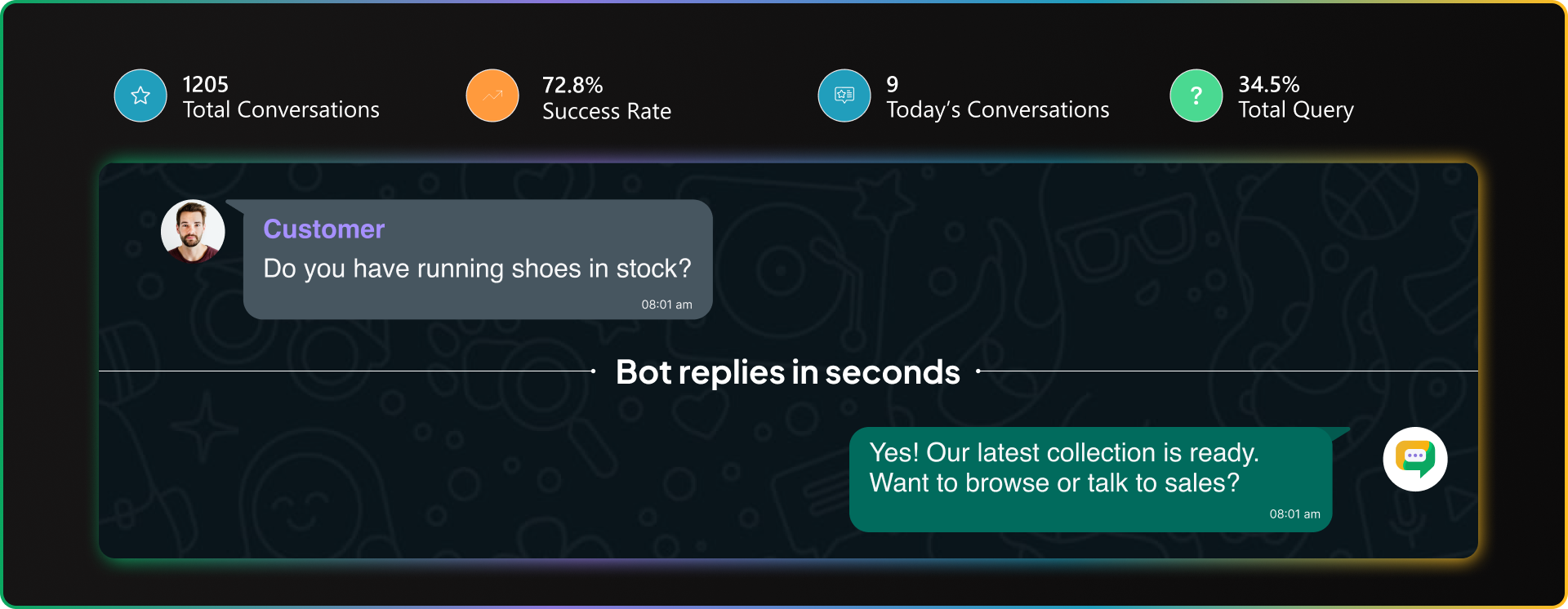
We leverage *AI agents and an *AI chat assistant to automate customer interactions, lead capture, and support. Imagine having a sales assistant who works 24/7, guiding potential customers, answering questions, and even qualifying leads.
Key benefits:
- Automates customer support with *Quick Chat.
- Engages prospects instantly using *AI-powered workflows.
- Integrates seamlessly with your marketing campaigns.
By using *AI-powered marketing automation platforms, small businesses can deliver personalized experiences that drive loyalty and conversions without hiring a large team.
CRM & Workflow Automation
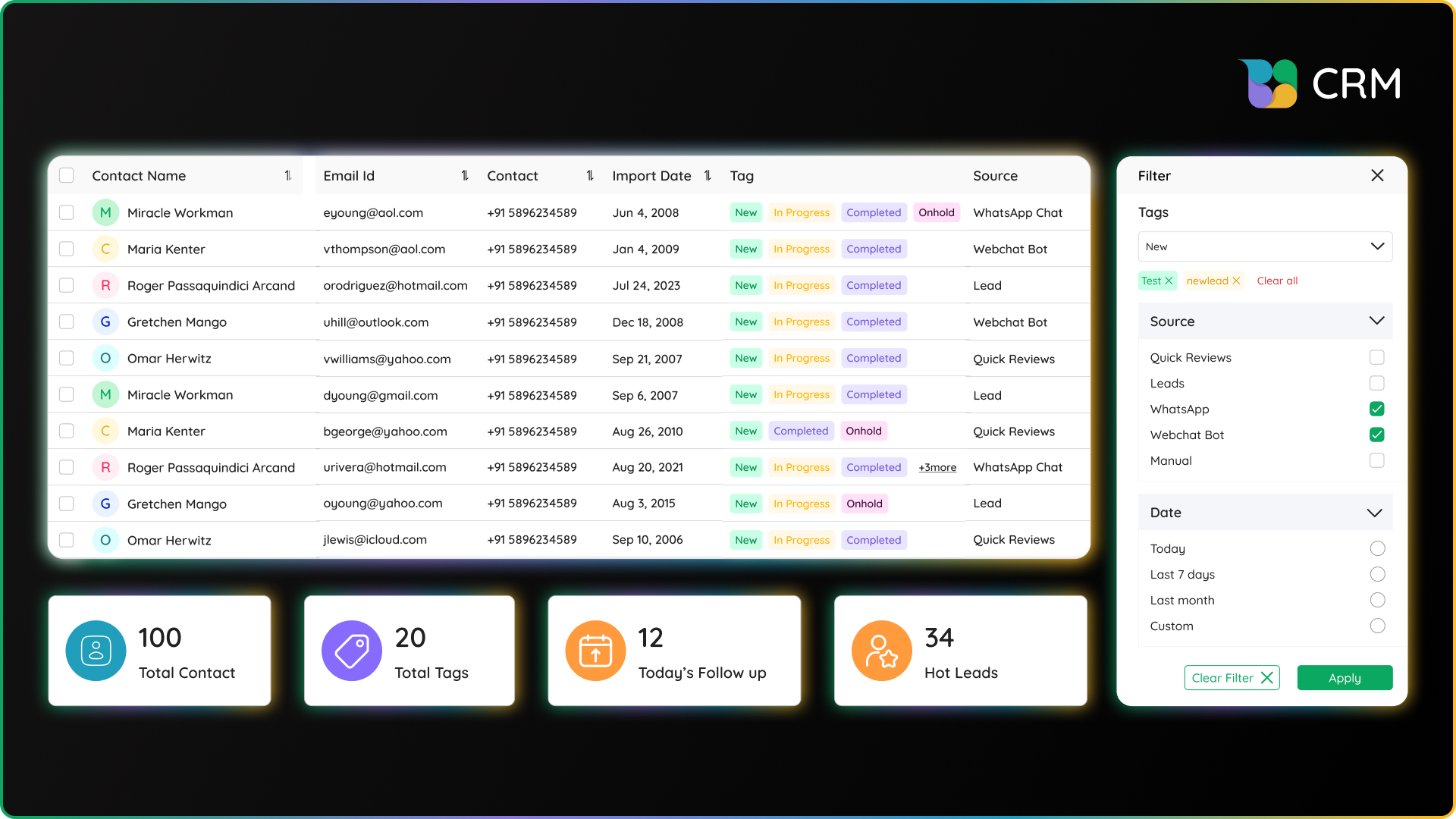
Managing customer relationships is critical for growth, and we combine *CRM functionality with *workflow automation for marketing campaigns.
Key benefits:
- Track leads, sales, and customer interactions in one place.
- Automate repetitive marketing and sales tasks.
- Boost productivity with *sales and marketing automation.
For small businesses, this means you can nurture customers efficiently and maintain strong *relationship-based marketing, increasing your chances of repeat business.
Review & Reputation Management
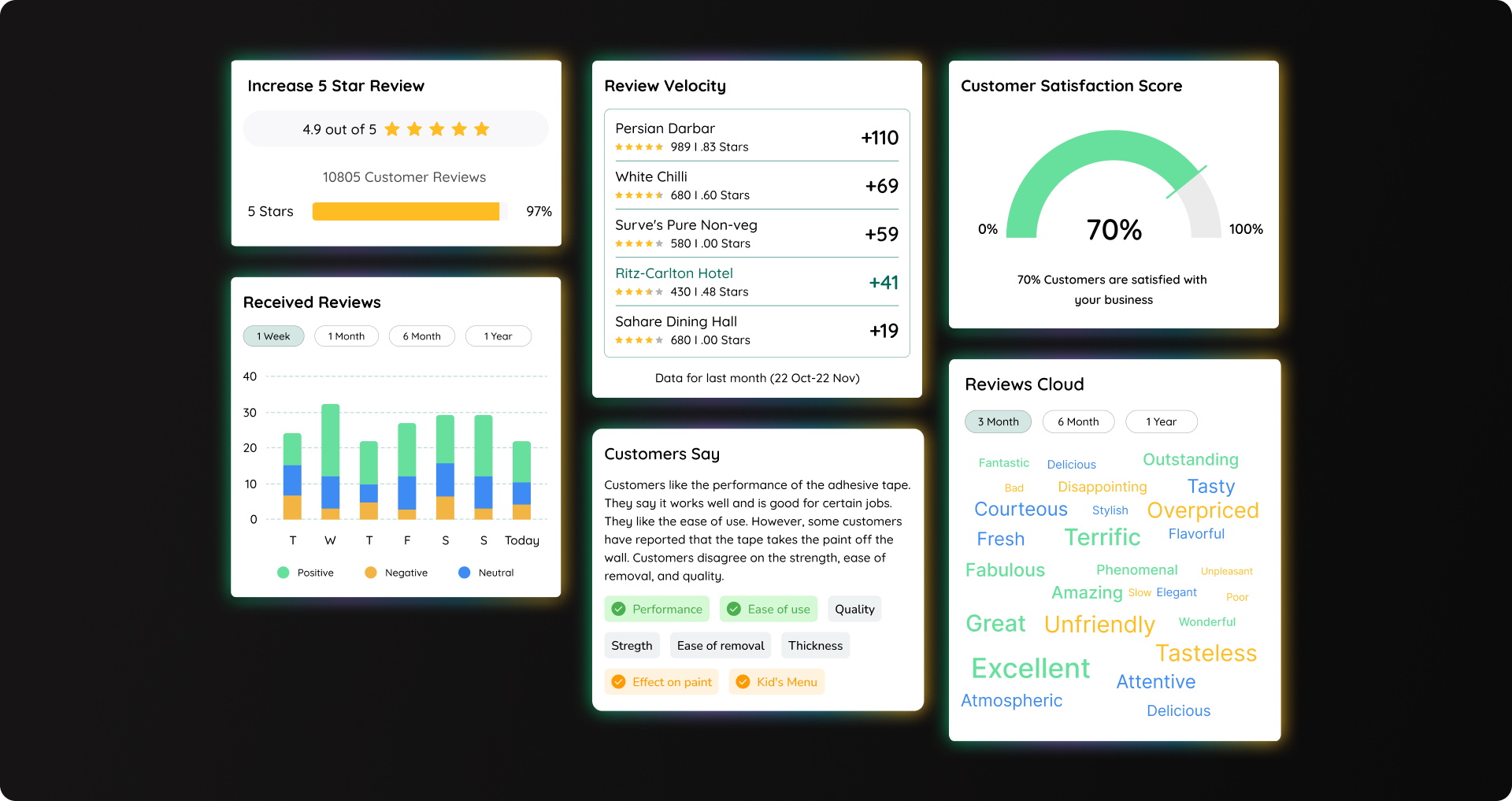
Customer reviews and social proof can make or break a business. QuickHub includes *review automation and *online review management features to help small businesses monitor, collect, and showcase customer feedback.
Key benefits:
- Increase *brand authority through positive reviews.
- Leverage *social proof in marketing campaigns.
- Easily manage customer testimonials to enhance *social validation.
With us, small businesses can integrate *user-generated content (UGC) and *customer reviews into their *email campaigns, social media, and websites to boost trust and conversions.
QuickHub's combination of *automated campaigns, AI agents, CRM, and review management gives small businesses a *complete toolkit for growth.
Affordable Marketing Automation for Startups and Small Businesses
For most startups and small businesses, the challenge isn't recognizing the value of marketing automation, it's finding a solution that fits the budget. Many popular tools charge enterprise-level prices or require multiple subscriptions just to cover the basics.
That's exactly where QuickHub stands out. It's built as an *affordable marketing automation platform designed specifically for *startups and small businesses in the US. Instead of paying for separate tools for email, CRM, ads, and analytics, we give you everything under one roof, at a fraction of the cost.
Why QuickHub Makes Sense Financially
- No need for multiple tools—QuickHub replaces 5–7 separate apps, helping you save hundreds of dollars monthly.
- All-in-one system—from *AI-powered marketing automation to *review management and *CRM, it's all included.
- Transparent pricing—Whether you're a solopreneur or managing a small team, there's a plan tailored to your needs.
QuickHub is ideal for businesses looking for *affordable marketing automation tools for startups that still deliver enterprise-level performance. It's a cost-effective alternative to expensive options like HubSpot, offering everything from *automated email campaigns and *workflow automation to *AI agents and *CRM, without the complexity or hefty price tag.
A Smarter Investment for Sustainable Growth
When your marketing runs on autopilot, you can focus on strategy, service, and scaling. We ensure your business can grow faster, smarter, and more profitably by giving you access to:
- *Marketing software for businesses that's intuitive and results-driven.
- *All-in-one marketing automation for entrepreneurs who want to scale without stress.
- *Automation tools for digital agencies to streamline campaigns for multiple clients.
With us, small businesses no longer have to choose between affordability and capability, they can finally have both.
Why QuickHub is the Ultimate Growth Partner
In today's fast-moving digital landscape, small businesses need more than just tools, they need a partner that helps them grow smarter and faster. That's exactly what we deliver. It's not just another *marketing automation platform; it's a complete ecosystem designed to simplify your workflows, strengthen relationships, and accelerate results.
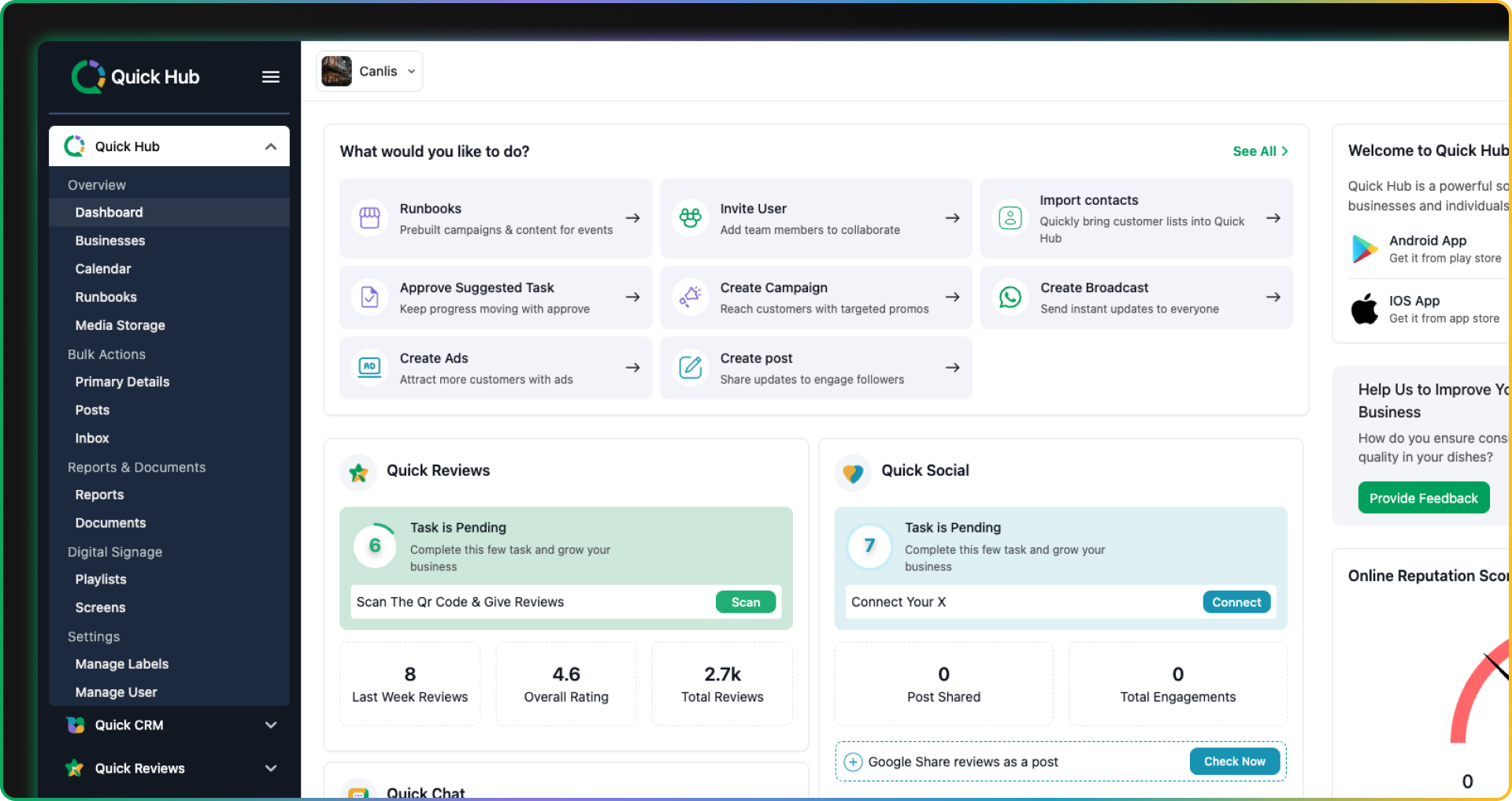
Unlike fragmented systems that require multiple integrations, we bring everything together in one seamless dashboard. From CRM and AI agents to automated email campaigns, review automation, and *social proof tools, QuickHub gives you the power to automate every aspect of marketing and customer engagement.
Built for Small Businesses, Backed by Results
QuickHub is engineered for small teams that need to move fast and make an impact. It combines the capabilities of the *best marketing automation software for small businesses in the US with the affordability startups need.
Whether you're a startup, entrepreneur, or small business owner, you'll benefit from:
- *AI-powered marketing automation platforms that learn and optimize as you grow.
- *Sales and marketing automation that turns leads into loyal customers.
- *Workflow automation for marketing campaigns that save hours every week.
- *All-in-one marketing automation for entrepreneurs looking for scalability without complexity.
What You Get
With features like:
- *AI agents that handle leads and support 24/7.
- *CRM to organize your pipeline and track performance.
- *Online review management to boost credibility and *brand authority.
- *Automated campaigns that run across email, SMS, and social channels.
We ensure every customer interaction is timely, consistent, and data-driven.
The Results
- Higher *conversion rates.
- More consistent *customer engagement.
- Streamlined operations and measurable ROI.
With us, small businesses no longer have to choose between innovation and simplicity. It's *powerful marketing software built to help you grow efficiently, without extra hires, endless tools, or technical headaches.
Getting Started with QuickHub
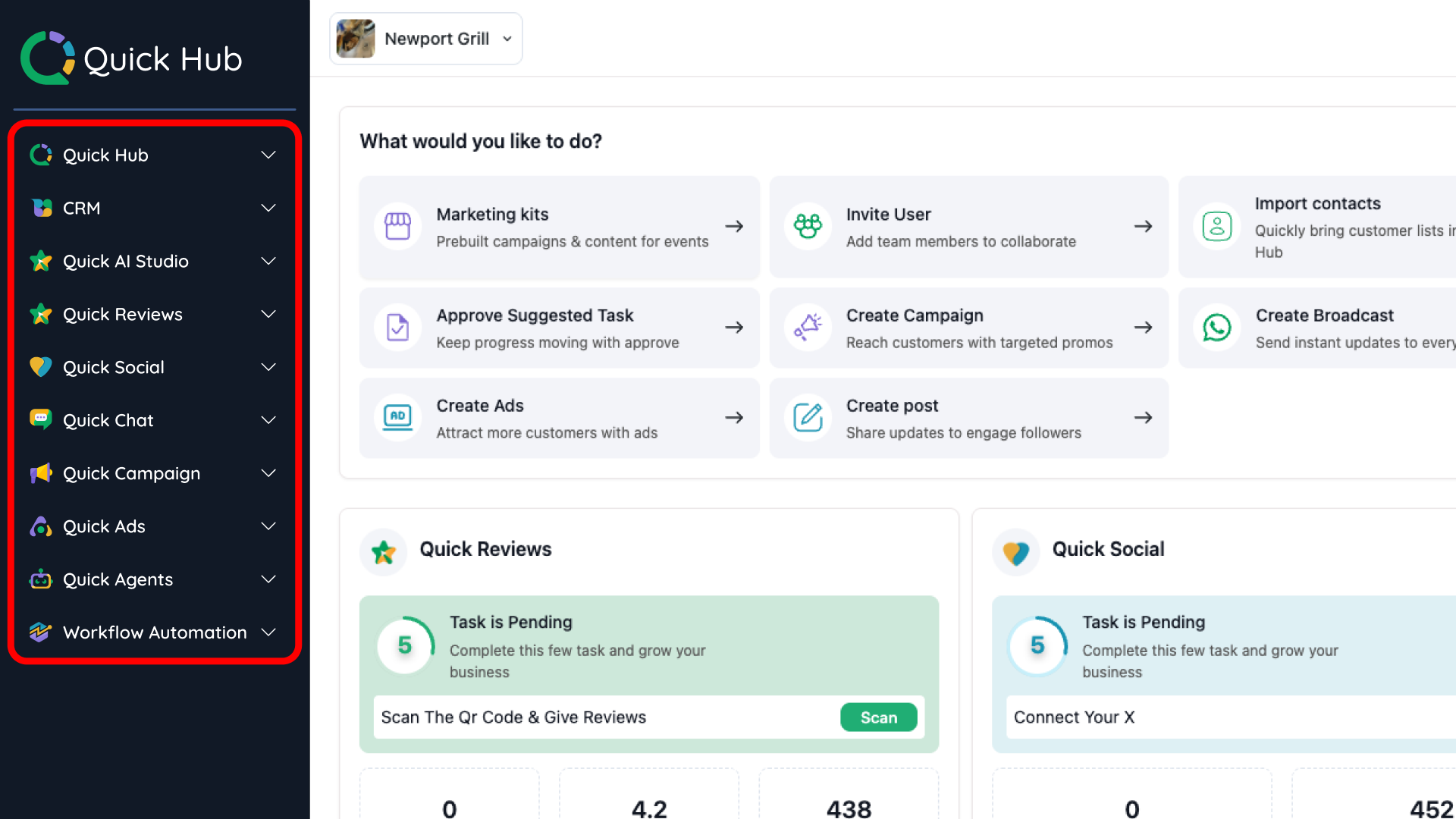
If you've ever wished your marketing could run itself, this is your moment. Getting started with us is simple and fast, and it's built for busy entrepreneurs who need results, not complexity.
Step 1: Sign Up and Set Up Your Dashboard
Create your QuickHub account and get instant access to your unified marketing dashboard. From here, you can connect your existing channels, email, SMS, WhatsApp, and social media, to start running campaigns from one place. Or watch it now.
Step 2: Automate Your Campaigns
Use our pre-built templates to launch *automated email campaigns and *SMS workflows in minutes. You can also let the *AI agents recommend the best content and send times for maximum engagement. Watch now.
Step 3: Set Up Your CRM & Customer Journeys
QuickHub's built-in *CRM helps you manage leads, track conversations, and organize follow-ups. You can even set rules for *sales and marketing automation, so every lead is nurtured automatically, no missed opportunities.
Step 4: Enable Review & Reputation Automation
Activate *review automation to collect customer feedback, monitor reviews across platforms, and use positive testimonials to boost *social proof and *brand authority. Watch now.
Step 5: Measure, Optimize, and Scale
Access your *cross-channel analytics to track performance and ROI. Identify what's working, double down on high-performing campaigns, and let *QuickHub's AI marketing automation optimizes the rest. Or watch it now.
Automate Growth, Simplify Success
Whether you're a startup exploring *affordable marketing automation for the first time or an established business seeking *the best marketing automation software in the US, we give you the tools to scale confidently.
Automate your workflows. Build stronger relationships. Drive measurable growth. With us, marketing no longer feels like a grind—it feels like momentum.
Start your QuickHub journey today and transform the way your small business grows.