
That’s the part no one warns you about.
Most teams don’t turn to #marketing automation because things are calm. They turn to it because everything feels overwhelming. Too many leads. Too many messages. Too many campaigns. Too many follow-ups slipping through the cracks. Automation feels like the logical fix, the system that will finally bring order to the chaos.
So, you sign up for a #marketing automation platform. You build workflows. You launch #automated email campaigns, #WhatsApp follow-ups, and #lead nurturing sequences. The system is running 24/7.
And yet… results don’t improve.
Open rates flatten. Response rates drop. Conversions stall. The #CRM fills with “contacted” leads that never move forward. Suddenly, #marketing automation starts feeling like a disappointment, or even worse, a liability.
Here’s the painful reality: Marketing automation amplifies problems before it solves them.
If your targeting is unclear, automation scales irrelevance. If your timing is off, automation accelerates annoyance. If your messaging lacks context, automation turns it into spam, faster and more consistently than any human ever could.
This is why so many businesses say, “Automation didn’t work for us,” when what they really mean is, “We automated without fixing the fundamentals.” They chased efficiency before clarity. Speed before strategy. Tools before the process. And the cost isn’t just poor performance. It’s lost trust, missed opportunities, and a growing gap between effort and results.
In this article, we’ll break down the 5 most #common marketing automation mistakes that silently kill ROI, and exactly how to avoid them. Because when marketing automation is done right, it doesn’t feel automated at all. It feels relevant. Timely. Helpful.
And that’s the difference between scaling noise and scaling growth.

Mistake #1: Automating Before You Understand the Customer Journey
This is the most common, and most damaging, #marketing automation mistake businesses make, especially when they’re scaling fast. Marketing automation promises speed, efficiency, and consistency. So teams rush to set up workflows, triggers, and campaigns. Emails go out automatically. WhatsApp messages fire instantly. Follow-ups are scheduled days in advance. Everything looks “optimized.”
But there’s a critical problem hiding underneath. The automation is built without a deep understanding of the customer journey.
When automation is created before mapping how a customer actually thinks, evaluates, and decides, it stops being helpful and starts becoming noise. The system executes perfectly, but in the wrong order.
Here’s what that looks like in practice.
A visitor downloads a guide. Instantly, they receive a sales-heavy email. A few minutes later, a WhatsApp message asks if they’re “ready to buy.” The next day, an automated reminder pushes a discount. None of these messages are technically wrong, but they are emotionally misaligned.
At this stage, the customer isn’t looking to buy. They’re looking to understand.
This mistake is incredibly common in:
- #Email marketing automation for #lead nurturing.
- #WhatsApp business automation tools.
- #CRM workflow automation without proper segmentation.
Automation doesn’t create relevance. Context does.
When you automate without customer journey mapping, you’re making assumptions about intent. And automation scales those assumptions instantly. That’s how brands end up overwhelming new leads, burning trust early, and seeing lower conversion rates despite “more automation.”
The solution isn’t to slow down automation. It’s to design before you deploy.
#High-performing marketing automation platforms, like Quick Hub, are built to trigger actions based on behavior, not guesses. Page views, reply actions, clicks, time delays, and engagement signals should define what happens next, not rigid timelines.
Automation should follow intent, not force momentum. When automation mirrors a real conversation like listening, responding, and guiding, it feels natural. When it doesn’t, it feels robotic. And customers can tell the difference instantly.
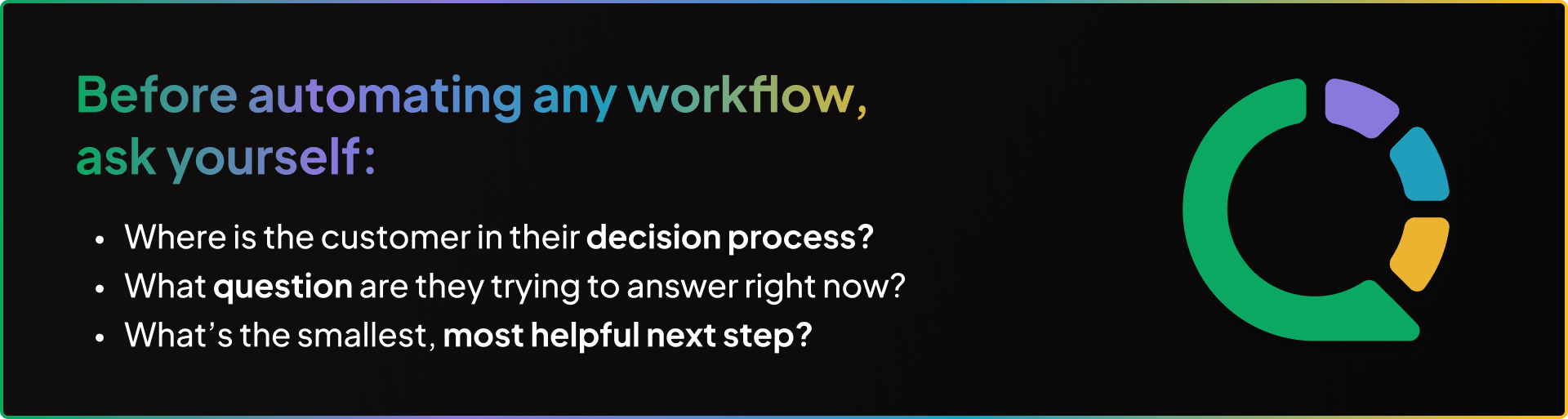
Mistake #2: Automating Without Clear Triggers or Intent
One of the most damaging #marketing automation mistakes businesses make is automating actions without understanding why they should happen in the first place.
Automation gets switched on. Workflows get built. Emails and WhatsApp messages start firing. But none of it is tied to real customer intent.
The result? Noise instead of value.
This usually happens when teams treat #marketing automation tools like bulk distribution engines instead of #behavior-driven systems.
A lead downloads an ebook → gets a sales-heavy pitch instantly. A user clicks an ad once → gets flooded with follow-ups. A customer asks a support question → gets pushed into a promo campaign.
These aren’t technical failures. They’re intent failures.
#Modern marketing automation platforms are built to react to signals, actions that indicate interest, hesitation, readiness, or disengagement. When automation ignores these signals, it becomes intrusive instead of helpful.
Customers feel pushed, not guided. Engagement drops. Opt-outs rise. Trust erodes.
Another common issue is vague triggers like:
- “New contact added”
- “Campaign sent”
These are too broad. They ignore context.
#Effective automated marketing workflows are specific:
- Viewed pricing page.
- Replied to WhatsApp.
- Abandoned form.
- Clicked but didn’t convert.
Without clear triggers, automation becomes guesswork at scale. And guesswork multiplied by volume quietly damages relationships.
#High-performing marketing automation is precise. It waits for the right moment, then responds with the right message, on the right channel. That precision is what separates automation that converts… from automation that annoys.

Mistake #3: Treating Automation as a “Set It and Forget It” System
One of the most expensive myths in marketing automation is the belief that once workflows are live, the job is done. Many businesses build #automated marketing campaigns, switch them on, and move on, assuming the system will keep performing forever.
It won’t.
Automation doesn’t eliminate thinking. It amplifies whatever logic you put into it. And when that logic becomes outdated, misaligned, or irrelevant, automation doesn’t fail loudly, it quietly bleeds performance over time. Customer behavior changes. Offers evolve. Channels shift. What worked 3 months ago may already be underperforming today.
But when teams stop reviewing their #marketing automation workflows:
- Outdated messages keep running.
- Mistimed follow-ups keep firing.
- Irrelevant campaigns keep going out.
At scale. This is where automation becomes worse than #manual marketing. A human notices when something isn’t working. A system doesn’t.
If a subject line stops converting, automation keeps sending it. If a WhatsApp flow feels too aggressive or poorly timed, it keeps pushing users away. Another hidden issue is ignored data.
Most #marketing automation tools provide insights:
- Open rates
- Click behavior
- Drop-off points
- Conversion paths
But many teams never look at them. Automation becomes a black box instead of a feedback loop. High-performing teams operate differently.
They treat automation as a living system:
- They audit workflows regularly.
- They test messaging.
- They adjust timing.
- They refine triggers.
Because automation isn’t something you abandon. It’s something you continuously tune.
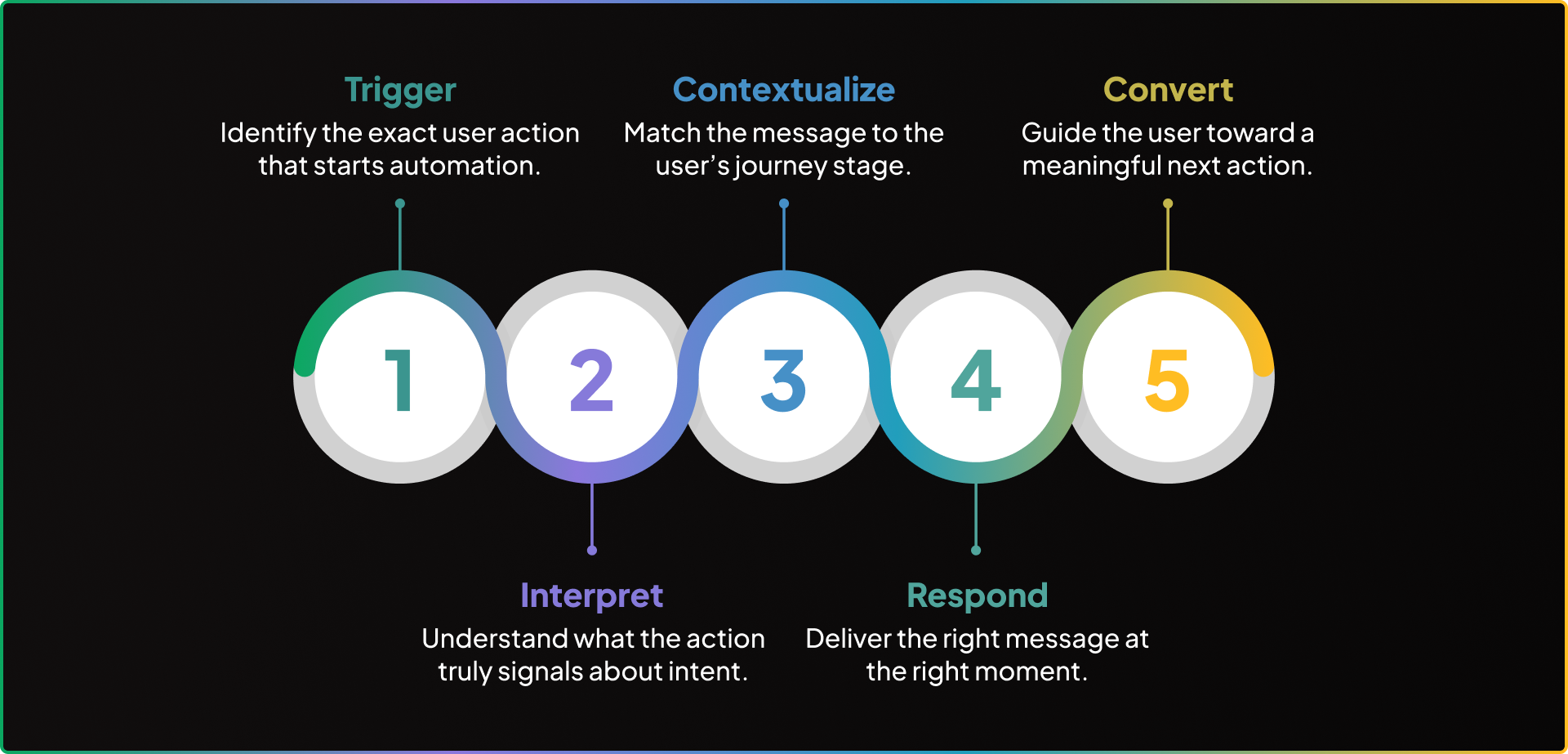
Mistake #4: Automating with scattered data, no single source of truth.
This is a mistake most teams don’t even realize they’re making, until growth starts breaking things. Many businesses automate on top of fragmented systems. One tool handles #email automation. Another runs #WhatsApp automation. A third keeps track of the leads. A fourth tracks ads. Each automation works individually, but none of them talk to each other properly.
On the surface, everything looks automated. But, under the hood, it’s chaos.
Nothing is “broken.” But nothing is aligned either.
This is a #silent automation failure, and it’s incredibly expensive. Automation depends on context. Without a unified customer profile, #automated workflows lose intelligence. Messages become repetitive. Follow-ups feel tone-deaf. Customers receive the wrong campaigns at the wrong time, even though everything is technically “automated.”
This mistake is dangerous because it scales confusion, not clarity. #True marketing automation requires connected systems, where contact status, conversation history, campaign engagement, and lifecycle stage are shared across workflows. Without that foundation, automation becomes a collection of isolated actions instead of a coordinated journey.
The most advanced automation isn’t about more workflows. It’s about shared data powering every workflow. This is why high-growth teams prioritize #unified marketing automation platforms over stacking tools. When automation runs from a single source of truth, every trigger becomes smarter, every message becomes more relevant, and every campaign builds on the last one instead of contradicting it.

Mistake #5: Rushing into Automation Without a Clear Plan (Over-Automating Prematurely)
This is the pitfall that can turn #effective marketing automation into a frustrating experience for your customers. Once teams see automation working, there’s a temptation to automate everything, every message, every follow-up, every response, every touchpoint. #WhatsApp automation replies instantly. #Email automation fires daily. SMS reminders stack up. Social posts go out on schedule. On paper, this looks like efficiency.
In reality, it often feels like spam.
Over-automation happens when businesses treat #marketing automation tools as volume machines instead of intent engines. Instead of asking ‘What does the customer need right now?’, automation often asks ‘What can we trigger next?’
The irony? Automation meant to increase engagement ends up killing it. Customers don’t hate automation, they hate irrelevant automation. When workflows aren’t designed around intent, lifecycle stage, or behavior, automation becomes noisy. And once trust is lost, conversion drops sharply. This mistake is especially common in #small and mid-sized businesses adopting marketing automation for the first time. There’s pressure to “use all the features,” run all campaigns, automate all touchpoints. But more automation doesn’t equal better automation.
Smart automation is selective. The best-performing #automated marketing workflows leave space for humans. They know when to pause. They know when to escalate. They know when silence is better than another message. Marketing automation should reduce friction, not create fatigue.
The real power move isn’t automating more. It’s automating only what improves the customer experience.

Why Most Marketing Automation Fails at Scale (Pattern Recognition)
Here’s the uncomfortable truth most teams discover too late: marketing automation doesn’t fix broken systems, it exposes them.
The reason so many automation initiatives collapse at scale isn’t the tool, the AI, or the budget. It’s the foundation. Automation is a multiplier. Whatever process you already have, good or bad, gets amplified. Clean processes scale cleanly. Messy processes turn into fast, automated chaos. That’s the core pattern behind failed #scalable marketing automation.
If your #manual workflow is unclear, automation won’t clarify it, it will execute that confusion faster:
- Inconsistent follow-ups → inconsistent automated follow-ups.
- Poor segmentation → mass irrelevant messaging.
- Delayed responses → poorly timed automated nudges.
This is why #small business marketing automation strategy must start with simplification, not sophistication.
At smaller scales, teams rely on memory:
- “John knows when to follow up.”
- “We usually send this after that.”
That works… until volume increases. Once leads, messages, and campaigns grow, memory-based execution collapses. Automation layered on top doesn’t create efficiency, it creates amplified inconsistency. #Scalable automation isn’t about complex workflows. It’s about clear workflows.
The teams that scale follow a simple rule: “If you can’t describe it in one sentence, it’s too early to automate.”
Effective #scalable marketing automation depends on 3 things:
- Clear triggers (what starts the workflow)
- Clear intent (why it exists)
- Clear outcomes (what success looks like)
When these are defined → automation becomes reliable.
When they aren’t → automation becomes noise.
More tools don’t create scale. More workflows don’t create scale. Clarity creates scale.
The truth is simple: Marketing automation doesn’t fail because it’s too advanced. It fails because it’s introduced before order exists.
Fix the system first. Then automate it.
How to Build Marketing Automation That Actually Works
Most businesses don’t fail at marketing automation because the tools are bad. They fail because they automate tasks instead of decisions. True marketing automation isn’t about sending more emails, scheduling more posts, or adding more bots. Design your #workflow automation to eliminate customer friction before it even appears.
Here’s how teams that scale actually build automation that works.
1. Start With Triggers, Not Tools.
This is the single most important mindset shift. Most teams ask:
- “Which automation tool should we use?”
- “Should we automate email or WhatsApp?”
- “Do we really need AI?”
Winning teams ask:
- “What event should never wait for a human?”
That’s the difference. A trigger is any significant action taken by a customer, such as submitting a form, sending a WhatsApp message, commenting on social media, missing a call, leaving a review, or clicking on a campaign.
With Quick Hub, these triggers already exist across the ecosystem:
- Quick Chat triggers WhatsApp workflows instantly.
- Quick CRM triggers lead-based automation.
- Quick Social triggers engagement-based actions.
- Quick Reviews triggers reputation workflows.
You don’t automate because you can. You automate because delay costs revenue. This trigger-first approach is what makes scalable marketing automation possible without complexity.
2. Automate Reactions, Not Assumptions.
Most automation fails because it assumes intent instead of responding to behavior. Bad automation says:
- “Everyone who will download this guide wants to buy it.”
Good automation says:
- “If they engage again, escalate. If they don’t, wait.”
With #behavior-based automation, the system adapts in real time:
- Click → follow up.
- Reply → route to sales.
- Ignore → pause or nurture.
- Engage → qualify.
Quick Hub’s Workflow Automation and Quick Campaign features allow this level of precision across WhatsApp, Email, and SMS, without blasting or guessing. This is when a marketing automation mindset swaps mass messaging for smart, carefully timed sequences.
3. Design Automation as a Journey, Not a Task List.
Another common mistake: automating isolated actions. Automation only works when it’s connected. Quick Hub enables #end-to-end customer journey automation:
- Ads via Quick Ads generate leads.
- Leads flow into Quick CRM.
- Conversations start in Quick Chat.
- Follow-ups run via Quick Campaign.
- AI assistance from Quick Agents.
- Social amplification via Quick Social.
- Trust built with Quick Reviews.
- Everything orchestrated with Workflow Automation.
This isn’t automation as a feature. This is automation as an operating system. When systems talk to each other, execution stops depending on memory, and starts depending on logic.
4. Review Workflows Like You Review Campaigns.
Here’s a hard truth: If you don’t review automation, it becomes invisible debt.
High-performing teams review workflows the same way they review ads or campaigns:
- Where do users drop off?
- Which trigger converts best?
- Where should humans step in?
Quick Hub makes this visible across channels, so automation improves over time instead of decaying silently. Automation that isn’t reviewed doesn’t scale. It drifts.
5. Build in Human Decision Points (Automation Isn’t Isolation)
The goal of automation is not to remove humans, it’s to protect their time. Smart automation always includes escalation rules, priority routing, and context for human takeover.
Quick Hub enables this balance using:
- AI-assisted responses via Quick Agents.
- Manual takeover in Quick Chat.
- CRM context from Quick CRM.
Automation handles volume. Humans handle nuance. That’s how you maintain trust while scaling.
6. Treat Automation as a Mindset Shift, Not a Tech Shift.
This is the final unlock. Marketing automation fails when teams ask:
- “What else can we automate?”
It succeeds when teams ask:
- “What should never be done manually again?”
With a #unified small business marketing automation strategy powered by Quick Hub, automation stops being a project, and becomes a habit. A habit of immediate response, consistent execution, and predictable growth. That’s not efficiency. That’s leverage. And leverage is what actually scales businesses.
Automation Is a System, Not a Shortcut
“Marketing automation doesn’t replace marketers. It exposes a weak strategy.”
That’s the uncomfortable truth most teams discover too late. Marketing automation was never meant to be a magic button. It doesn’t fix unclear positioning, weak messaging, or broken customer journeys. What it does is amplify whatever already exists. Strong strategy becomes unstoppable. Weak strategy becomes painfully obvious.
This is why automation must be treated as a system, not a shortcut. When built on clarity, the right #marketing automation strategy becomes leverage. It accelerates response times, enforces consistency across channels, and builds trust at scale. Customers receive timely, relevant communication. Leads are nurtured without delay. Teams stop reacting and start operating with intent. But when automation is layered on confusion, it backfires.
Poor targeting → louder noise Bad timing → instant annoyance Disconnected workflows → fragmented experiences
Instead of saving time, teams spend more energy fixing what automation exposes. This is the dividing line between growth and stagnation. The businesses that win treat automation as infrastructure. They follow #automation best practices:
- Clear triggers.
- Behavior-based logic.
- Regular workflow reviews.
- Defined human intervention points.
They use #digital marketing automation tools to remove friction, not to flood inboxes.
Before you automate the next task, pause and ask:
- Are your workflows helping customers, or just firing messages?
- Is your automation reducing effort, or increasing noise?
Because automation doesn’t create strategy. It reveals it. And the strongest systems don’t just execute faster, they make growth inevitable.