

Introduction
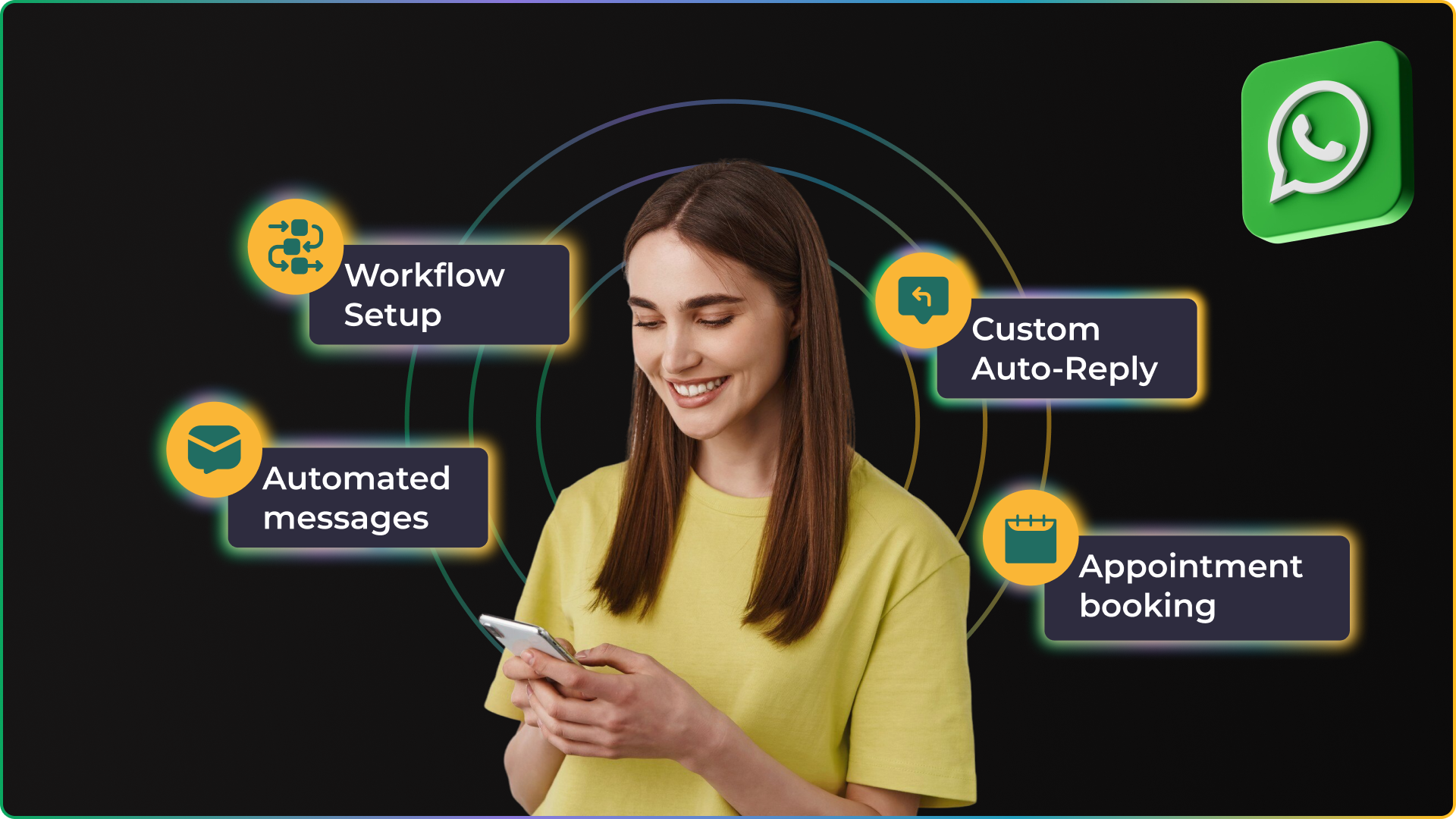
Long gone are the days when every WhatsApp message your business received needed a human to reply.
"Hi, do you deliver here?" "What's the price?" "Is this available in blue?"
The same questions. Repeated. Again. And again. And again. And again.
At first, it feels manageable. You reply between meetings. You answer from your phone while handling a hundred other tasks simultaneously. Then, you console yourself, "I'll get to the rest later."
But later never really comes.
Instead, messages pile up. Response times slow down. One missed reply turns into a missed lead. Another delay turns into a customer choosing a competitor who replied faster. And before you realize it, WhatsApp, the channel meant to feel personal, starts feeling overwhelming, chaotic, and stressful.
Every message demands attention. Every reply eats into your time. And every delay quietly costs you money.
Now imagine a different reality.
Imagine if every WhatsApp conversation your business receives could automatically move the customer closer to a decision, answering questions instantly, sharing the right information at the right moment, following up without reminders, and triggering the next best action automatically. No manual chasing. No copy-paste replies. No "Sorry for the late response" messages.
That's not a future concept. That's exactly what WhatsApp automation and WhatsApp business automation tools make possible today.
The Pain Point: Managing Conversations at Scale
WhatsApp has quietly become the most important customer communication channel for businesses across industries. Customers don't want to fill forms. They don't want to wait for emails. They don't want to sit on hold. They message. And expect replies in minutes, sometimes seconds. And they expect the same level of clarity, accuracy, and professionalism every single time.
But here's the reality most businesses face. As your business grows your customer base expands, your inbound WhatsApp messages increase, and your support, sales, and inquiry load multiplies. What once felt like "personal communication" slowly turns into missed WhatsApp messages, delayed responses, inconsistent replies across team members, forgotten follow-ups, and burned-out support and sales teams.
Manual WhatsApp management simply doesn't scale. Even if you hire more people, you still struggle with:
- Maintaining instant response times
- Ensuring consistent brand messaging
- Handling peak-hour message volumes
- Tracking every customer conversation reliably
- Turning chats into measurable business outcomes
Growth exposes operational cracks. And WhatsApp is often where those cracks show first. This is where WhatsApp automation software steps in, not to remove the human touch, but to protect and scale it.
What Is WhatsApp Automation, Really?
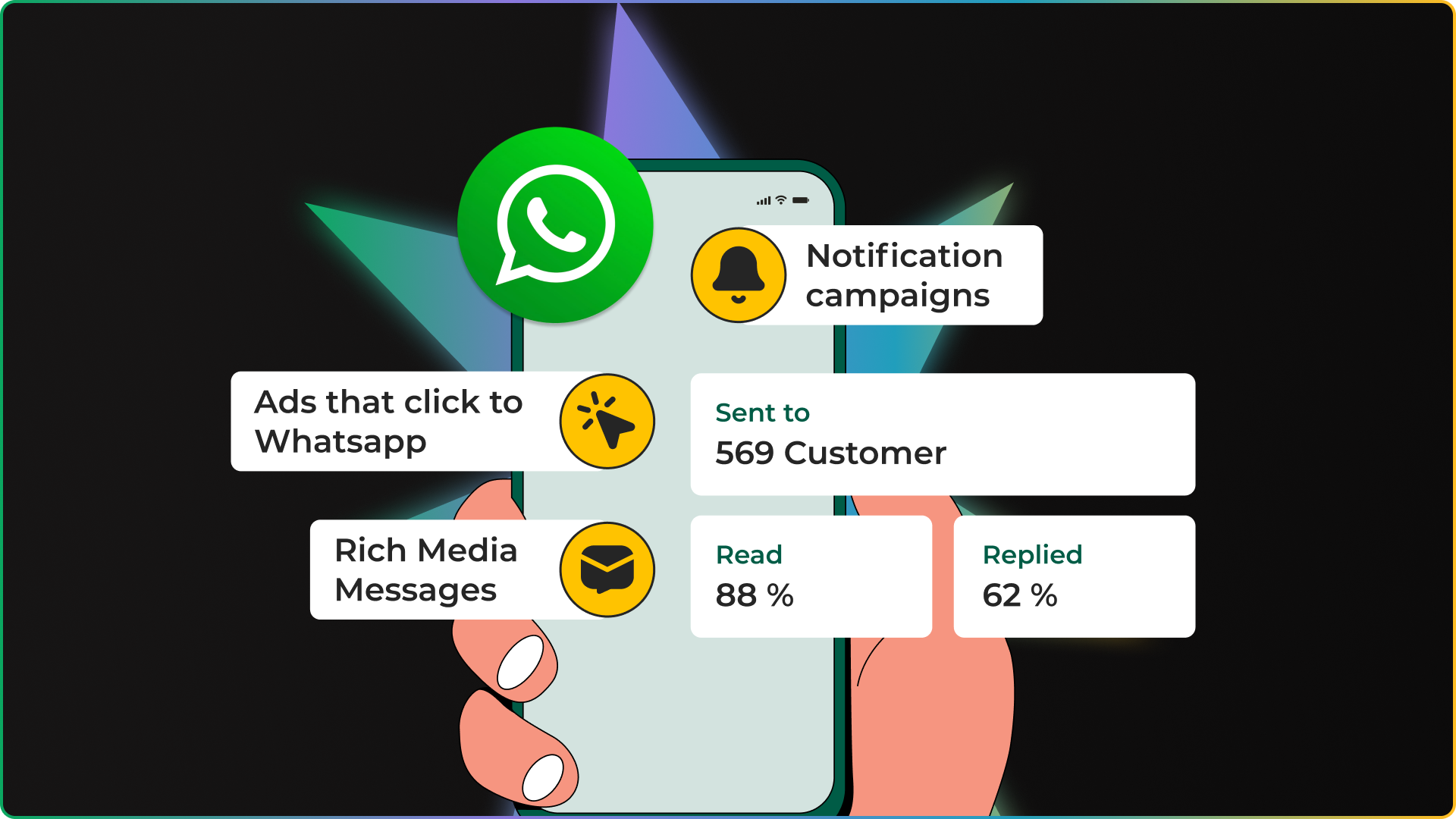
WhatsApp automation is the process of building automated WhatsApp workflows and AI-powered WhatsApp chatbots that respond, guide, follow up, and take action based on customer behavior.
Think of it as a smart assistant running inside your WhatsApp Business API setup.
It knows:
- When to reply automatically
- What message to send
- How to guide the conversation logically
- When to route the chat to a live agent
Instead of reacting manually to every message, your business runs rule-based and AI-assisted WhatsApp workflows that work 24/7.
What WhatsApp Automation Can Handle Effortlessly
A well-built WhatsApp chatbot automation system can:
- Instantly greet new WhatsApp leads
- Auto-respond to FAQs (pricing, availability, business hours)
- Share product catalogs, menus, or service details
- Send appointment confirmations and reminders
- Follow up automatically with inactive leads
- Send order updates, invoices, and delivery notifications
- Route complex queries to human agents
- Trigger actions inside CRM, email, or marketing tools
Once these workflows are set up, they run continuously, making WhatsApp customer engagement automation reliable, scalable, and consistent.
The Real Business Impact: More Than Just Time Savings
Many businesses adopt WhatsApp automation thinking it's just about efficiency. In reality, WhatsApp marketing automation and conversational automation delivers far more strategic value.
1. Speed That Builds Immediate Trust
Speed is currency in modern digital conversations. When a customer messages your business on WhatsApp, the first 30–60 seconds determine whether they'll engage or move on to a competitor.
Automation ensures:
- Instant WhatsApp replies
- Zero missed messages
- Immediate acknowledgment of every inquiry
This speed directly improves lead conversion rates and customer satisfaction.
2. Consistency Across Every Conversation
Human teams vary. Automation doesn't. With WhatsApp business automation, every customer receives:
- Accurate, approved information
- Consistent brand tone
- Structured conversation flows
Whether it's 10 messages or 10,000 messages a day, consistency never breaks.
3. Scalable Personalization at Scale
Modern AI WhatsApp chatbots support:
- Name personalization
- Context-aware responses
- Behavior-based messaging
- Conditional conversation paths
This allows businesses to deliver personalized WhatsApp marketing messages without manual effort.
4. Reduced Errors and Operational Risk
Manual communication often leads to incorrect pricing shared, missed follow-ups, or wrong information sent. Automated WhatsApp workflows run on predefined logic, eliminating guesswork and human error.
5. Higher Conversion Rates Through Conversational Selling
WhatsApp automation isn't just customer support automation. It's WhatsApp sales automation. By sending timely responses, nudges, and follow-ups, automation guides customers toward purchases, bookings, replies, and qualified leads. Conversations stop being reactive and start becoming revenue-driven.
How WhatsApp Automation Works (Without the Complexity)
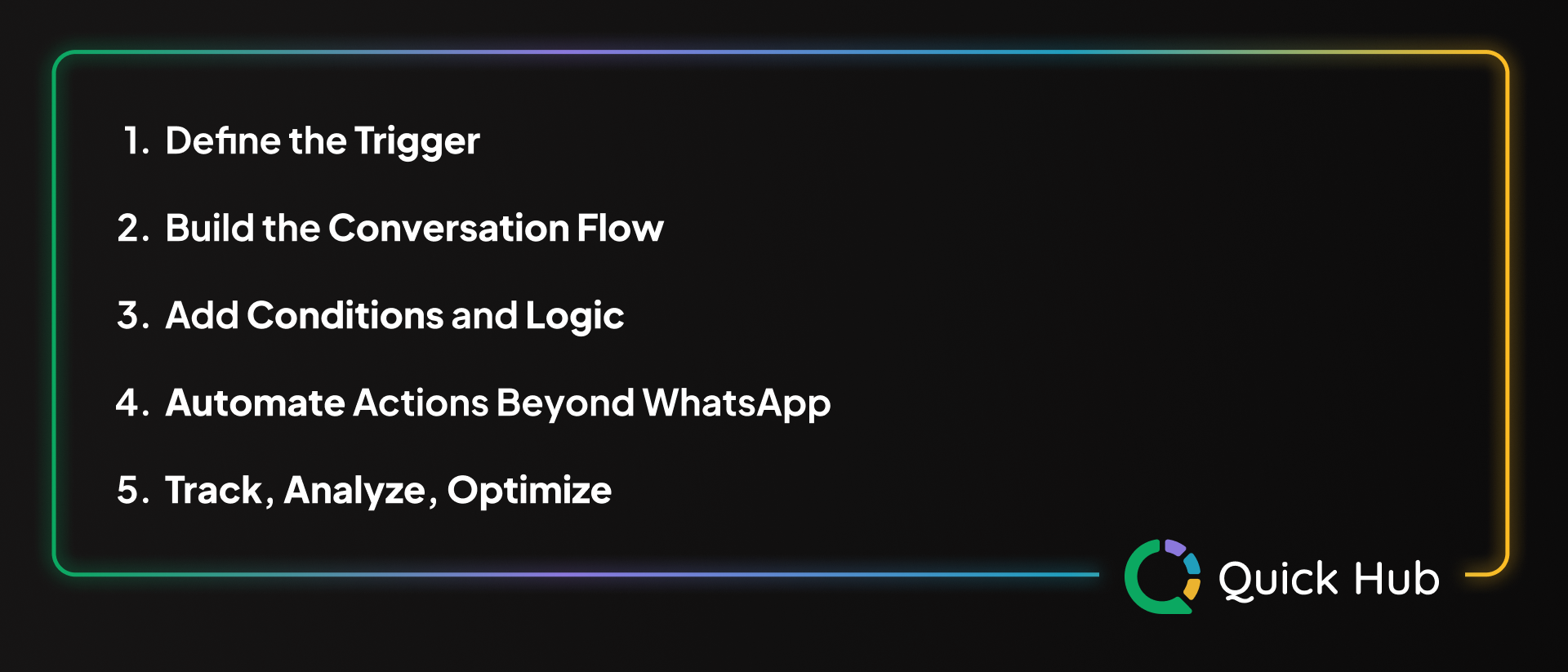
Step 1: Define the Trigger
Triggers activate automation workflows. Common WhatsApp automation triggers include:
- New incoming WhatsApp message
- Specific keyword detection
- First-time customer interaction
- Campaign or broadcast responses
Step 2: Build the Conversation Flow
Using visual builders, businesses design:
- Welcome messages
- Quick reply buttons
- Guided conversation paths
Example:
- "Product Info"
- "Order Status"
- "Talk to Support"
Each choice triggers a different response.
Step 3: Add Conditions and Logic
Using if/then rules:
- If interest = product → send catalog + CTA
- If support query → route to agent
- If no reply → send follow-up after 24 hours
This is logic-driven WhatsApp chatbot automation, not static replies.
Step 4: Automate Actions Beyond WhatsApp
Automation can:
- Update WhatsApp CRM records
- Trigger emails or SMS
- Start lead nurturing campaigns
- Assign contacts to workflows
This turns WhatsApp into part of a full omnichannel automation system.
Step 5: Track, Analyze, Optimize
WhatsApp automation analytics show:
- Open rates
- Response rates
- Drop-off points
- Conversion paths
This enables data-driven conversational marketing.
Real-World Use Cases Across Industries
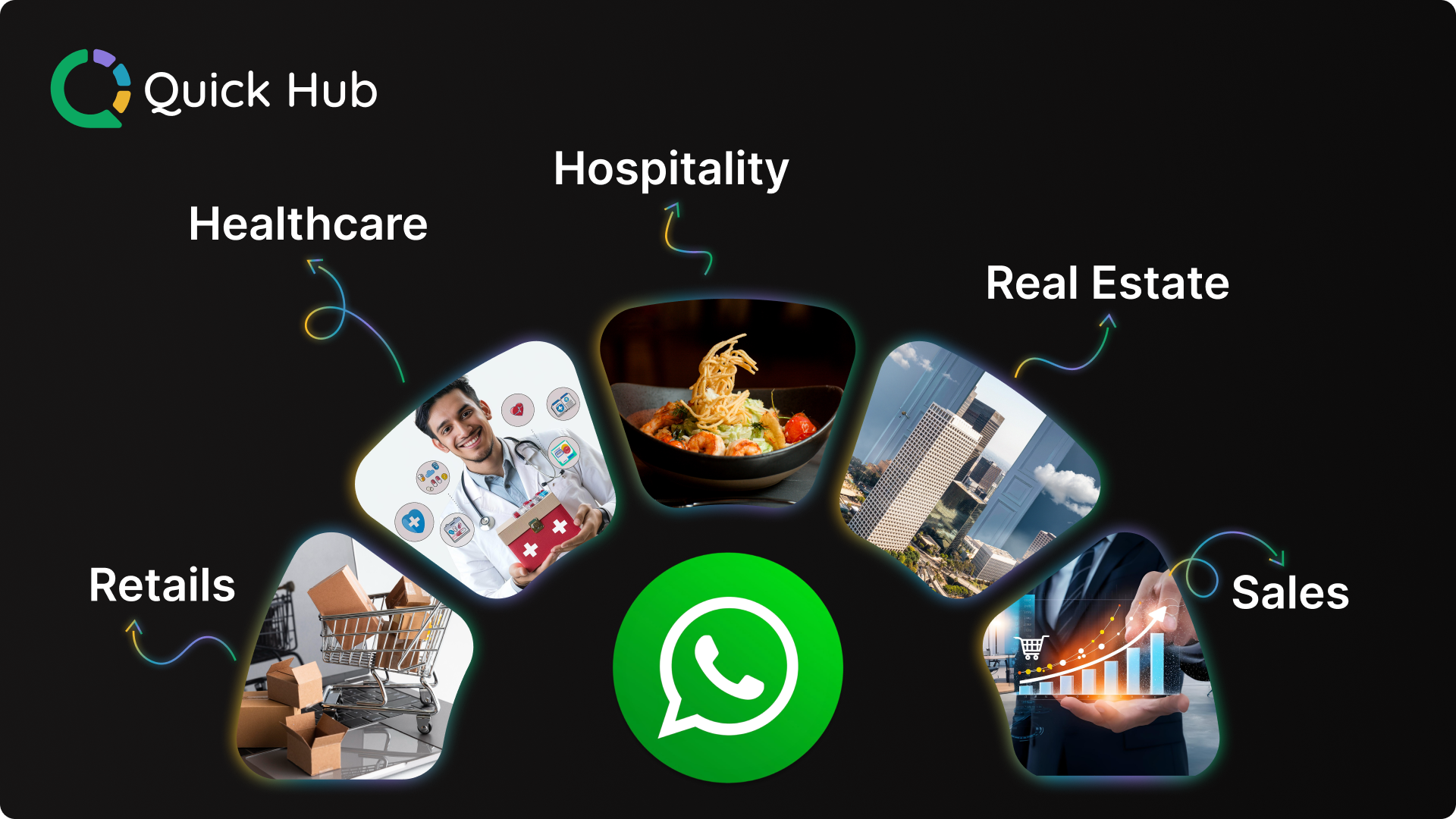
WhatsApp automation adapts across industries:
- E-commerce WhatsApp automation: order updates, abandoned cart follow-ups
- Healthcare WhatsApp automation: appointment reminders
- Restaurant WhatsApp chatbot: reservations, menus
- Real estate WhatsApp automation: property inquiries
- Sales WhatsApp automation: lead qualification
If conversations drive business, automation amplifies results.
Where QuickHub Fits In
This is where WhatsApp automation truly shifts from a simple reply tool into a full-fledged growth engine.
QuickHub brings WhatsApp chatbot automation, workflow automation, and customer communication into one connected system, without writing a single line of code. Instead of managing scattered bots or isolated automations, businesses get one centralized platform where every conversation, trigger, and action works together.
Inside QuickHub, you can easily:
- Create and manage WhatsApp chatbots
- View chatbot status in real time
- Track triggers and completed steps
- Safely edit both draft and published workflows without breaking live conversations
Every automation is visible, controlled, and scalable.
More importantly, QuickHub connects WhatsApp automation directly with Quick CRM, Quick Campaigns, and WhatsApp broadcasts, ensuring that every message, reply, and follow-up becomes part of a larger customer journey. Leads are captured. Conversations are contextual. And engagement continues automatically, long after the first message is sent.
With QuickHub, you're not just automating chats. You're automating the entire customer experience, from first message to final conversion.
Smart WhatsApp automation knows when to stop. Automation can handle FAQs, routing, and follow-ups. And humans can handle complex queries, emotional conversations, and closing deals. That balance is what makes automation so effective.
Final Thoughts: Conversations Are the New Conversion Funnel
Every WhatsApp message is more than just a conversation, it's a potential conversion waiting to happen. When powered by WhatsApp automation, AI chatbots, and automated workflows, conversations stop being reactive and start becoming strategic growth drivers.
With QuickHub, WhatsApp evolves into a complete business engine. Quick Chat handles real-time conversations and chatbot automation. Workflow Automation ensures every inquiry triggers the right follow-up action automatically. Quick CRM captures and organizes leads the moment they engage. Quick Campaign nurtures prospects through email, SMS, and WhatsApp broadcasts. Quick Ads and Quick Social drive traffic into conversations, while Quick Reviews builds trust before a customer even sends the first message. And with Quick Agents, AI works behind the scenes to scale engagement effortlessly.
This isn't just messaging. It's lead generation, sales automation, and customer engagement, all working together. With QuickHub, conversations don't end in replies. They end in results.